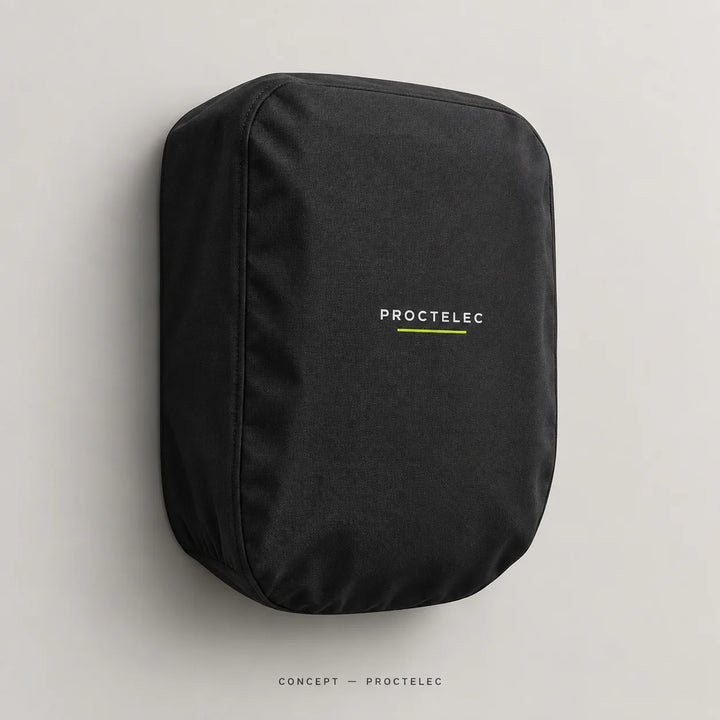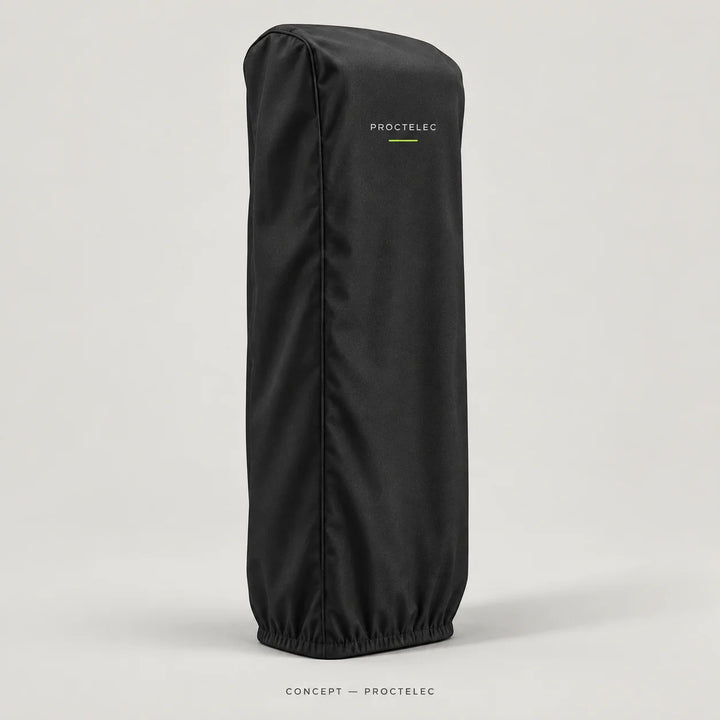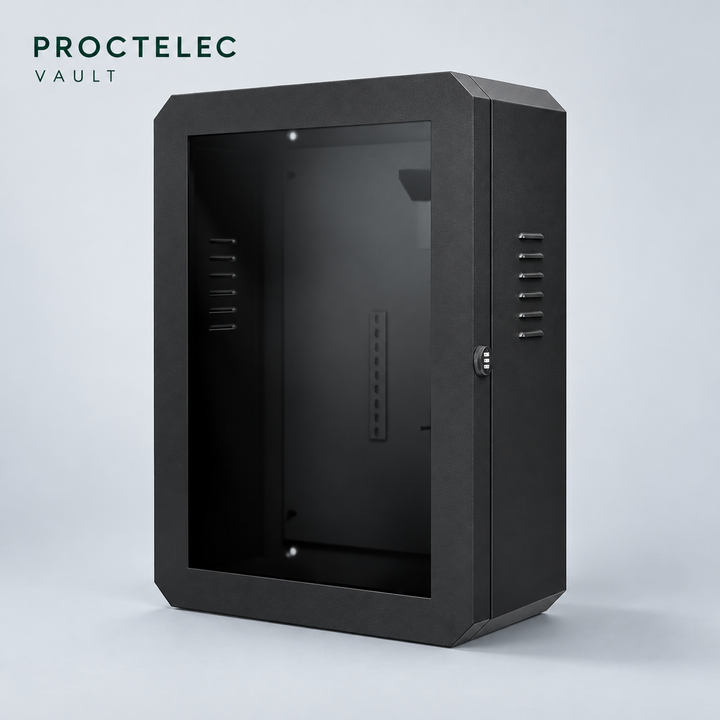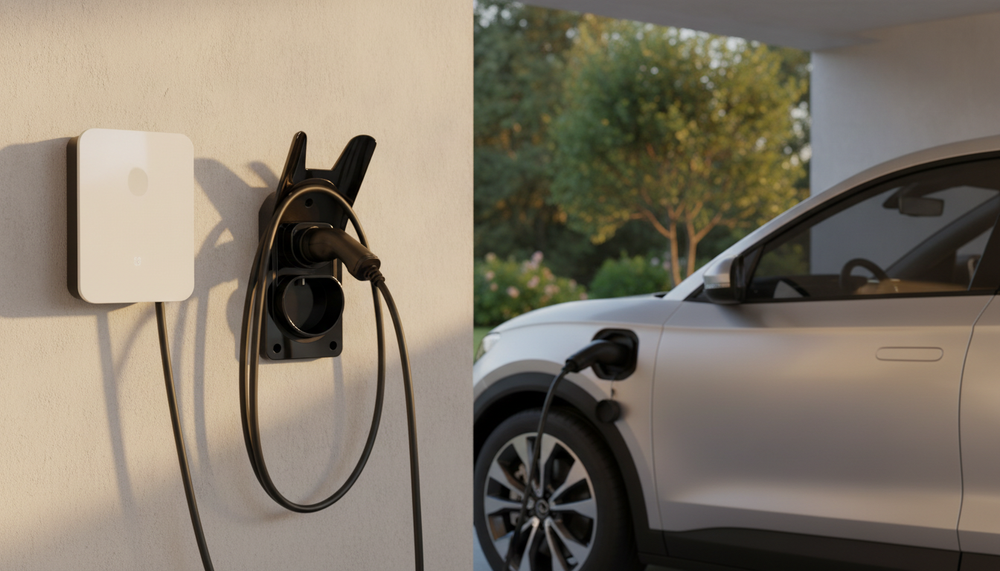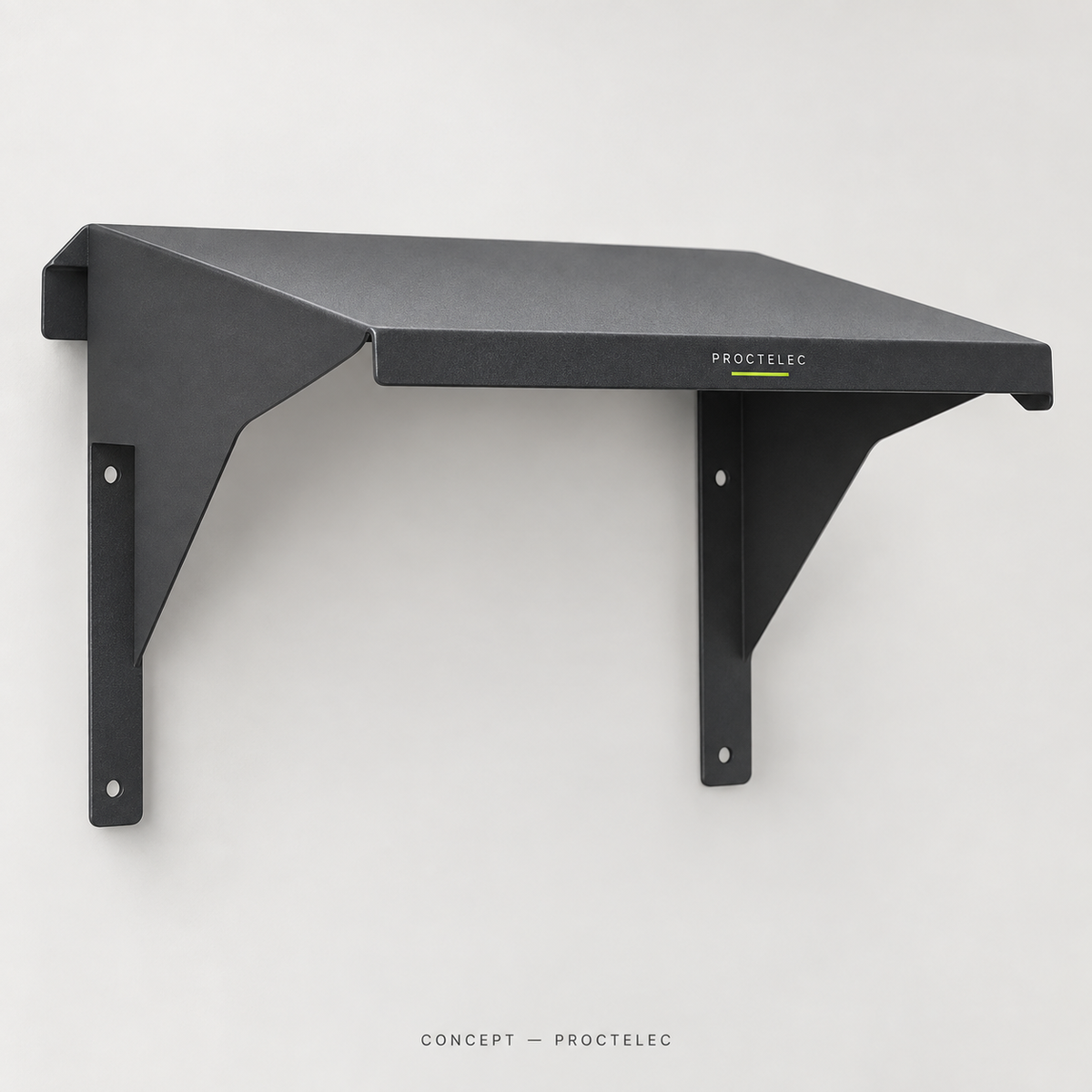
An EV charger shelter should be chosen according to the equipment you need to cover and how it is used. A canopy protects the top of a wallbox while leaving it freely accessible. A cover protects a charger while it is not in use. An enclosure limits access to the unit. These accessories meet different needs.
- Wall-mounted charger exposed to rain and snow: compare canopies.
- Unused charger to cover: look at covers designed for idle equipment.
- Unit accessible to other people: consider a lockable enclosure.
- Charging port on the car: you need a charging port cover, not a wallbox shelter.
Does an outdoor EV charger need a shelter?
Start by checking your charger’s manual. It sets out the installation conditions, the operating environment and the clearances to keep around the unit. Adding a roof does not turn a device designed for indoor use into equipment suitable for outdoor use.
A canopy can reduce direct exposure of the top of the unit to rain and debris. How useful it is, however, depends on the wall, the direction of the rain and the position of the connector. Under a carport that already provides cover, the benefit may be smaller than on an exposed wall.
Ventilation remains a key criterion. The manufacturer Wallbox recommends, among other things, a sufficiently ventilated location and, for the equipment concerned, one out of direct sunlight. Check the requirements for your own model before adding an accessory around it. Read Wallbox’s recommendations on accessories and exposure.
Canopy, cover or enclosure: which should you choose?
| Your need | Solution to consider | Limitation to be aware of |
|---|---|---|
| Covering the top of a wall-mounted charger | Shelter canopy | Does not change the charger’s IP rating. |
| Covering an unused unit | Cover storage cover | Remove before charging, unless the charger manufacturer has given written approval. |
| Covering an idle charging post | Cover Post storage cover | The overall size, brackets and how it stays in place must be checked. |
| Limiting direct access to the unit | Vault enclosure | Fit and ventilation to be confirmed; no absolute protection against theft. |
If your main concern is equipment security, continue with our guide to lockable charger enclosures. An open canopy and a closed enclosure do not solve the same problem.
Five checks before ordering a canopy
1. Overall size with the connector plugged in
Measure the height, width and depth of the unit. Add the space taken up by the handle when it is plugged in. A side socket needs different clearance from an outlet underneath the charger. Also check the movement needed to grip and remove the connector.
2. The clearances required in the manual
Compare the canopy’s usable dimensions with the clearances specified by the manufacturer. An accessory’s external dimensions do not automatically tell you its available internal space. Also keep the controls, indicator lights and maintenance points accessible.
3. The wall and the charger’s position
An uneven wall, a corner or a downpipe can complicate installation. Check the space available around the wallbox. The choice of anchors depends on the wall material; a fixing specified for one wall is not necessarily suitable for another.
4. The path of the water
Observe the location when it rains, from a safe spot. Does the water come from above, from a gutter or from the side? A small roof does not fix a leaking gutter or stop every splash. Choose the accessory based on this actual exposure.
5. Everyday handling
Check that you can plug in, unplug and store the cable without working around an obstacle. If several people use the charger, the storage and controls must remain easy to understand. On a business site, have a first installation approved before equipping several identical bays.
Two situations to help you decide
A wallbox on a house wall: if you need to cover the top while keeping quick access to the connector, the canopy is the first category to look at. Then, if needed, complete connector storage with a wall holder suited to the cable.
A charger in a shared car park: treat weather exposure and access to the equipment separately. A roof can address the first point; an enclosure or the charger’s access management addresses the second. Combining accessories without checking how they fit together can make handling and maintenance harder.
Prepare your choice with a simple checklist
Before comparing several canopies, gather the same information for each one. An attractive photo and a stated width are not enough to judge how it will fit. Your comparison will be more useful if you separate what relates to the charger, what relates to the accessory and what relates to the location.
| About | Information to record | Useful document |
|---|---|---|
| The charger | Model, overall size, connector position, clearances required around the unit. | Manufacturer’s manual and photos of the installation. |
| The canopy | Usable dimensions, documented material, openings, fixing and exposure conditions. | Data sheet for the chosen model. |
| The location | Type of wall, obstacles, direction of rain and snow, and maintenance access. | Overview and on-site measurements. |
| Installation | Suitable anchors, wall constraints and nearby utility lines. | Approval by the person carrying out the installation. |
If you are comparing two products of similar size, check that the dimensions describe the same thing. One measurement may refer to the roof alone, another to the whole assembly including its side panels. Ask where the connector goes and which area must stay clear. This method is more reliable than choosing based on a charger brand name listed in a product title.
Also compare installation and maintenance
The price of the canopy is only part of the project. Look at the fixings included, any extra parts needed for your wall and the installation work. Do not assume that a supplied kit suits every wall. For several chargers, ask for a quote that lists supply and labour separately.
Also think about cleaning and access. You must be able to see the charger, read its indicator lights and follow its maintenance instructions. A bulky protection that hides the areas to be checked can complicate this routine. The canopy should fit in with normal use of the charger and let you spot a visible problem.
After installation, check with the installer that everyday actions are still possible: gripping the handle, reaching the controls, storing the cable and accessing the parts that need maintenance. This practical check does not replace the technical inspections of the installation; it helps you spot a poorly positioned accessory before it gets in users’ way.
Mistakes to avoid when choosing
Buying based on the width of the unit alone. The depth of the connector, any side outlet and the clearances can be more restrictive than the width. Take the configuration during charging into account.
Attributing another canopy’s specifications to Shelter. The materials, dimensions and conditions of use of a competing model do not apply to the Proctelec product. Only compare information confirmed for the model you want to buy.
Using an enclosure to solve every weather exposure issue. Enclosing the space further can change the conditions around the charger. If what you need is a roof, start with that category. If you also want to limit access, have a solution approved that is compatible with the operating requirements.
Adding accessories without checking that they can coexist. A cover, a roof and a holder may occupy the same area. Sketch their positions and the movements needed before ordering them all. A small, well-organised space can be more practical than a pile of protections.
Frequently asked questions about EV charger shelters
Does an outdoor wallbox always need a canopy?
No. It depends on its manual and the location. Equipment suitable for outdoor use may not need an additional roof. Choose an accessory for an identified need, not because every charger supposedly has to be covered.
Does a canopy make the charger waterproof?
No. It can reduce some direct exposure, but it does not change the ingress protection declared by the manufacturer. A fault, water ingress or a damaged unit requires a diagnosis; adding a roof is not a repair.
Can you charge under a cover?
The Cover and Cover Post covers presented here are intended for idle equipment. Remove them before charging, unless the charger manufacturer has given written approval for this use. Always comply with the equipment’s ventilation requirements.
Can you use the same canopy for an entire car park?
Only after checking the charger models and layouts. Two bays may have different obstacles or exposure. Approve a representative configuration, then identify the exceptions before ordering several units.
Does a charger shelter cover the car’s charging port?
No. The canopy is fitted near the wallbox. The vehicle’s charging port is somewhere else and calls for a charging port cover compatible with the bodywork.
Choose the protection that suits your installation
Compare canopies and covers, then check your charger’s dimensions and the instructions in its manual before ordering.
Not sure about your installation? Ask for advice on choosing a canopy.