Protecting an EV charger starts with its mounting and surroundings. A lockable enclosure can limit casual access to the equipment, but it cannot compensate for unsuitable wall fixings or an exposed charging cable. Assess the complete installation before choosing accessories.
Record the charger dimensions, connector clearance, cable exits and the ventilation space required by its manufacturer. An enclosure's external dimensions do not give its usable internal space.
Identify what needs protection
A charger behind a closed garage door faces different access conditions from one in a shared outdoor car park. Look at the equipment, its fixing points and the cable separately. Record who needs access for charging, inspection and maintenance. A useful protection system must remain practical for those people every day.
Start with suitable mounting
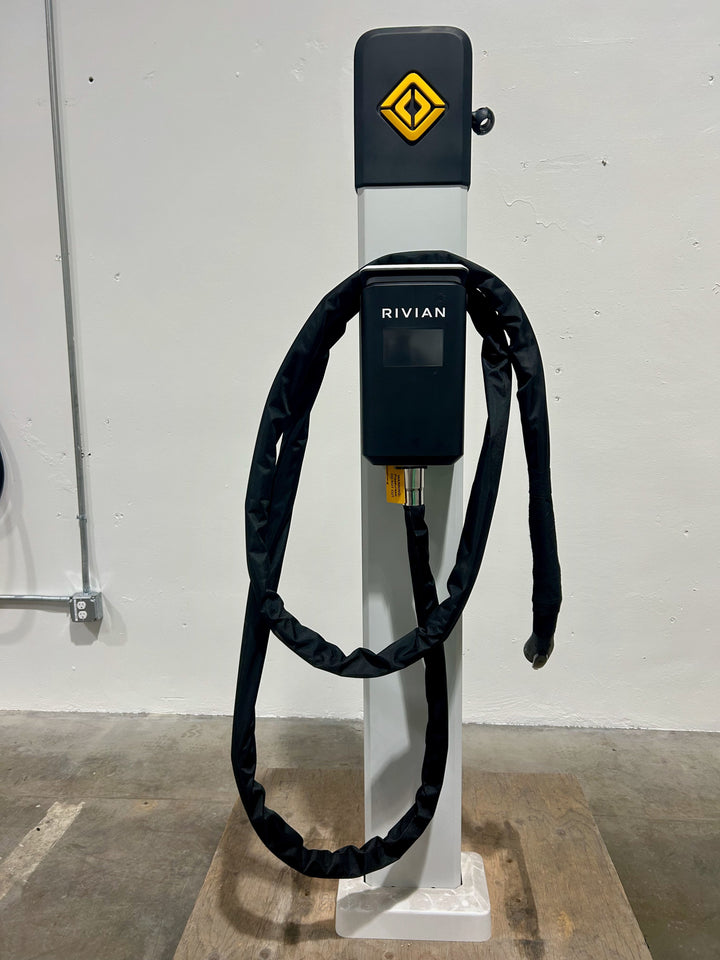
Have the charger mounting and support assessed for the actual wall or pedestal. The surface, fixings and installation instructions determine the appropriate solution. Do not open an electrical enclosure or alter the charger to fit an accessory without the manufacturer's approval and a qualified installer's assessment.
Choose a lockable enclosure
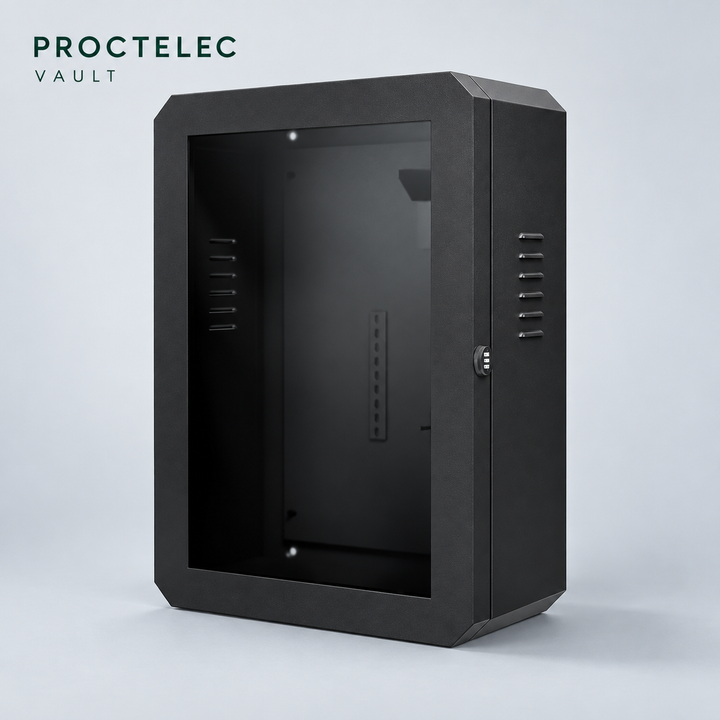
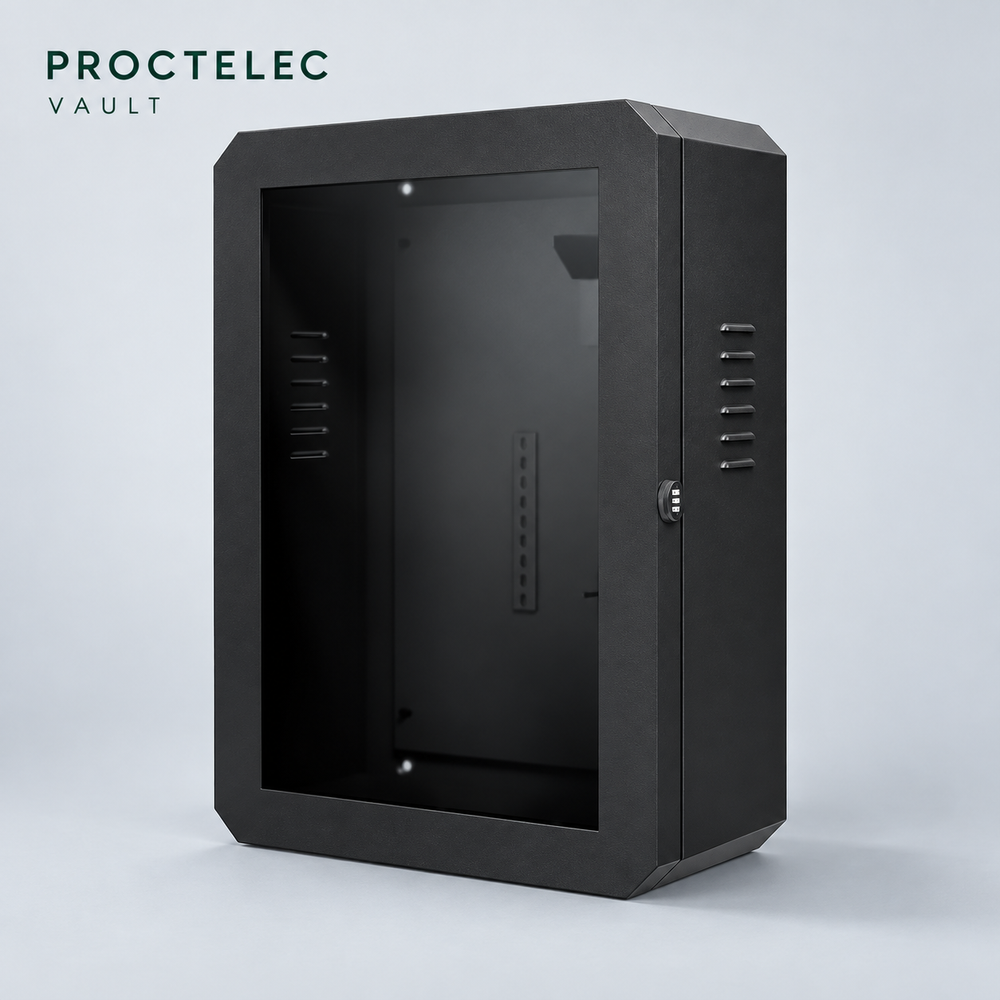
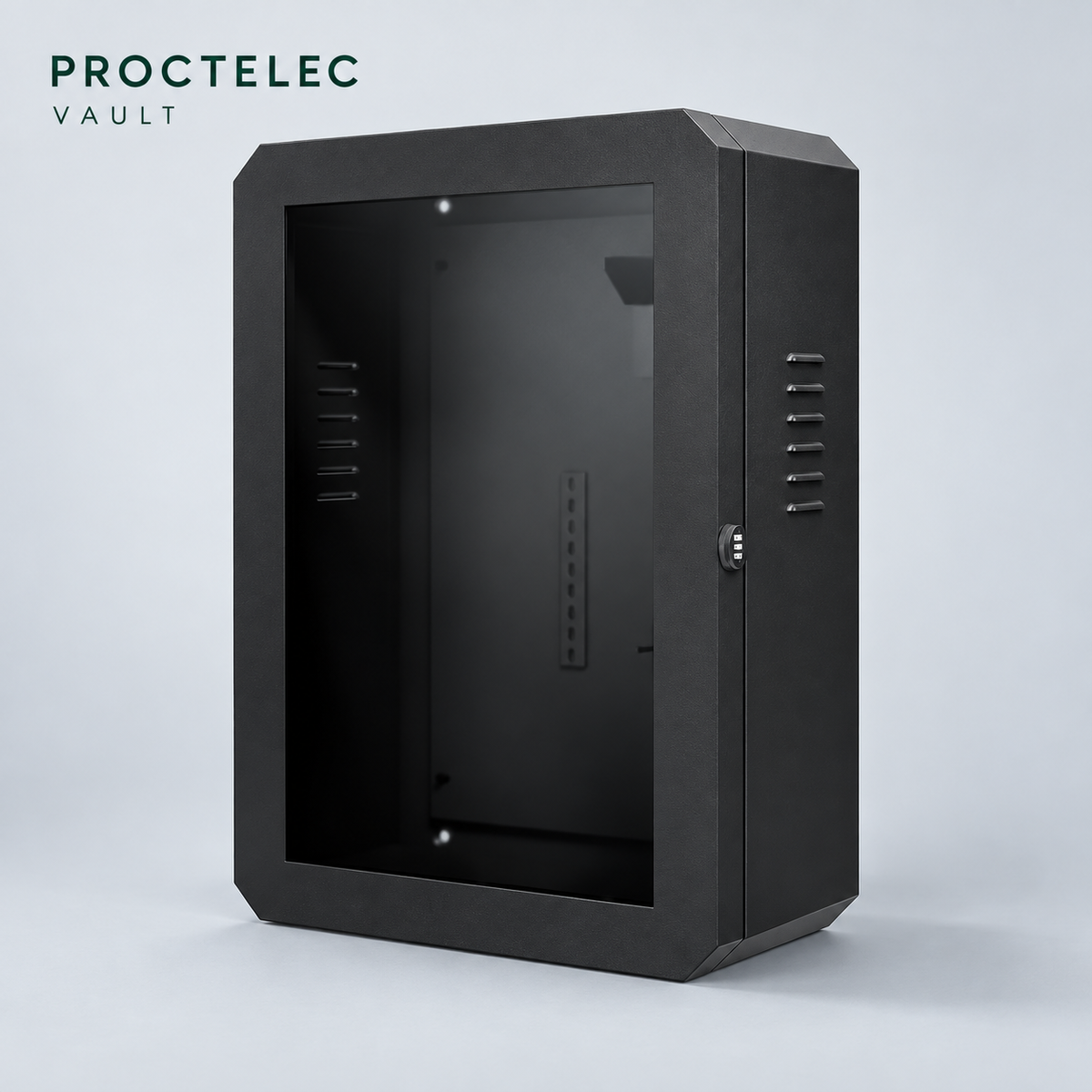
The Vault enclosure surrounds a wall charger with painted galvanised steel, a transparent window and a mechanical combination lock. It is offered in two external sizes: H60 × W40 × D20 cm and H70 × W50 × D25 cm. Compare usable internal space and access to controls before ordering.
Allow room for the connector, cable bends, door opening and the charger's required heat dissipation. Existing ventilation openings do not prove that every charger will operate correctly inside. Vault is supplied as an enclosure; charger, cable, pedestal and installation are not included. No certified burglary, IP or IK resistance rating is claimed for this listing.
Keep authorised access straightforward
Decide who holds the combination and how it will be changed when users change. Keep inspection points accessible and avoid a position that blocks a walkway or forces the cable around a sharp edge. An enclosure should not encourage users to leave a door open permanently because charging has become awkward.
Protect the cable and parking space too
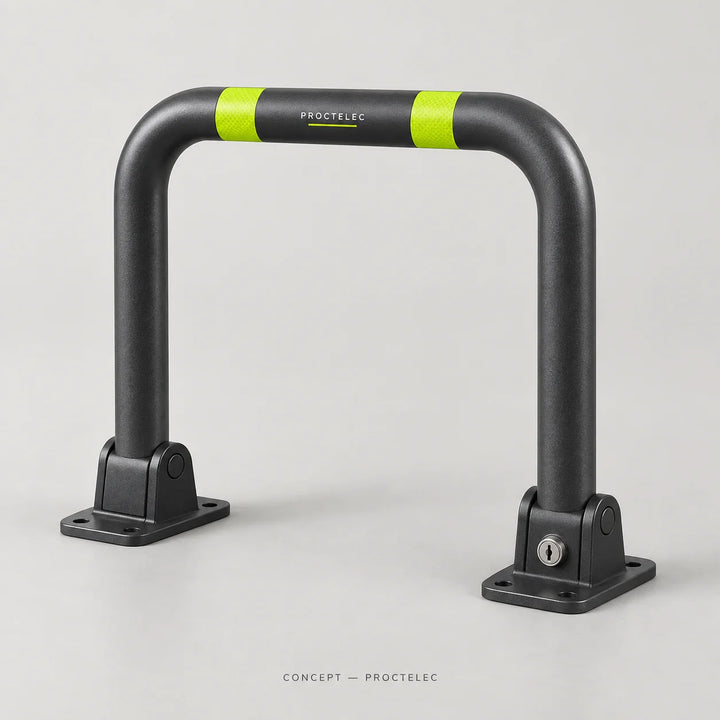
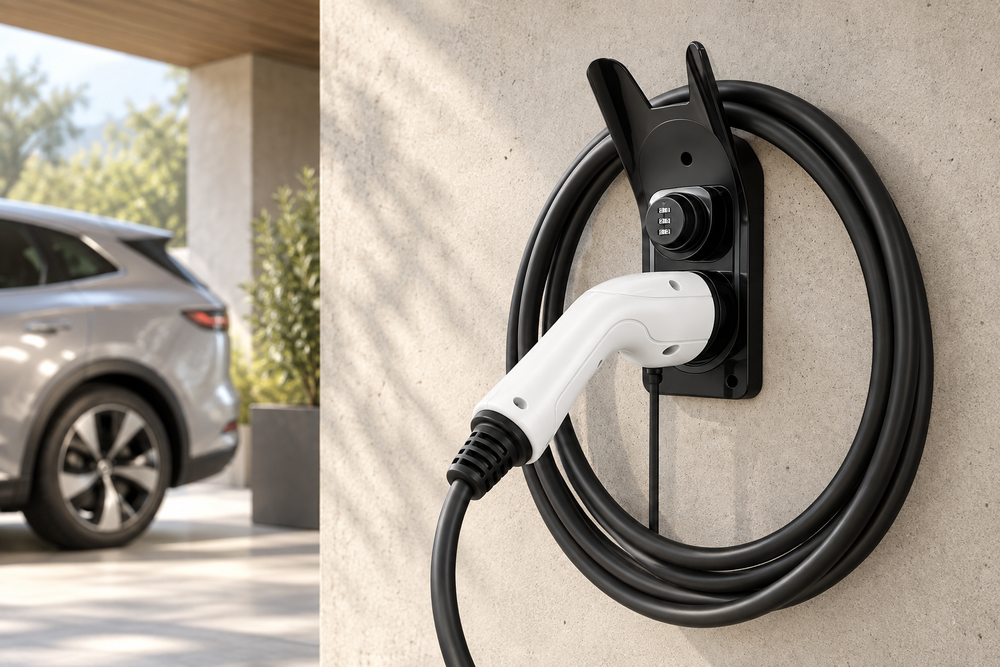
A Dock Code holder helps secure a compatible Type 2 connector during storage. For an exposed cable length, assess EV Cable Shield separately. A Park parking barrier manages occupation of a private space; it is not a crash-rated protective bollard. Vehicle impact risk needs an appropriate site design.
Check the full installation
Before buying, prepare photographs, dimensions and the charger manual. After fitting, check normal access, cable handling and ventilation with the installer. For a shared site, use our charger vandalism prevention guide to organise inspection and incident reporting.