In an underground car park or a shared courtyard, your EV charger is visible and within reach of other residents. The most common worry is not always theft: it is a neighbour plugging their car into your charger at your expense, or tampering with your cable. The good news is that there are several ways to lock it down, from a free setting in the app to a code-locked enclosure.
First enable the charging authorisation built into your charger (RFID card, app, code or key), then lock whatever remains accessible: the connector, the socket or the unit itself.
1. Check your charger’s access mode
Many wallboxes start charging as soon as a car is plugged in. This ‘open access’ mode is handy in a locked garage but unsuitable for a shared car park. Yet most recent models offer charging authorisation: RFID card, locking via the app, PIN code or key.
| Model | Possible authorisation |
|---|---|
| Zaptec Go and Go 2 | RFID card, app |
| Easee Charge, One | RFID/NFC card |
| Wallbox Commander 2 | PIN code, RFID card, app |
| Wallbox Pulsar Plus, Pulsar Max | Locking via app |
| Tesla Wall Connector (Gen 3) | Access control via app |
| Schneider Electric EVlink Pro AC | RFID card |
| Hager Witty Start | Key-operated version or open access |
| KEBA KeContact P30 | RFID card or key, depending on version |
| myenergi zappi | PIN code, app |
| Alfen Eve Single Pro-line | RFID card |
Features depend on the exact version and firmware. Check the manual or ask your installer to enable charging authorisation. Then keep control of the cards and codes: a card lent to someone or a code that is never changed undoes part of the protection.
2. Tethered charger: lock the connector
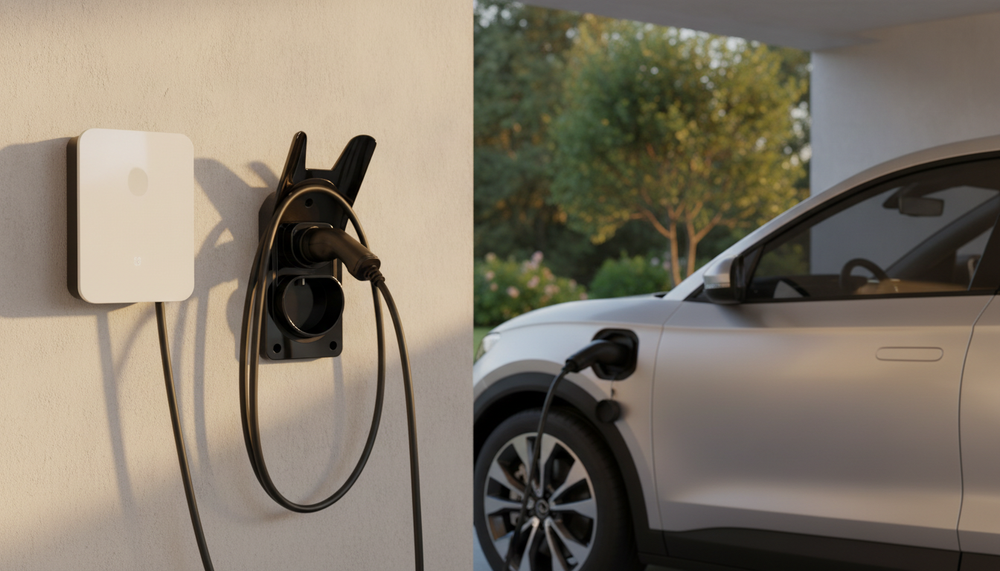
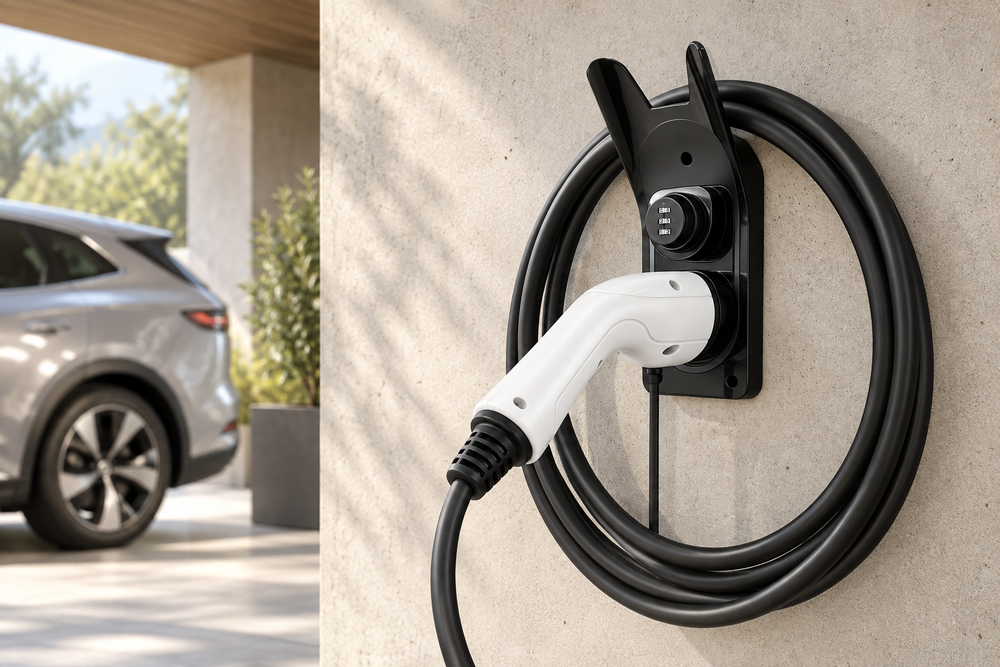
With a tethered cable, the connector stays within reach between charging sessions. If the charger is in open access mode, anyone can unhook it and plug it into their car. Even with an RFID card, a connector left on the ground gets damaged and dirty, and invites tampering.
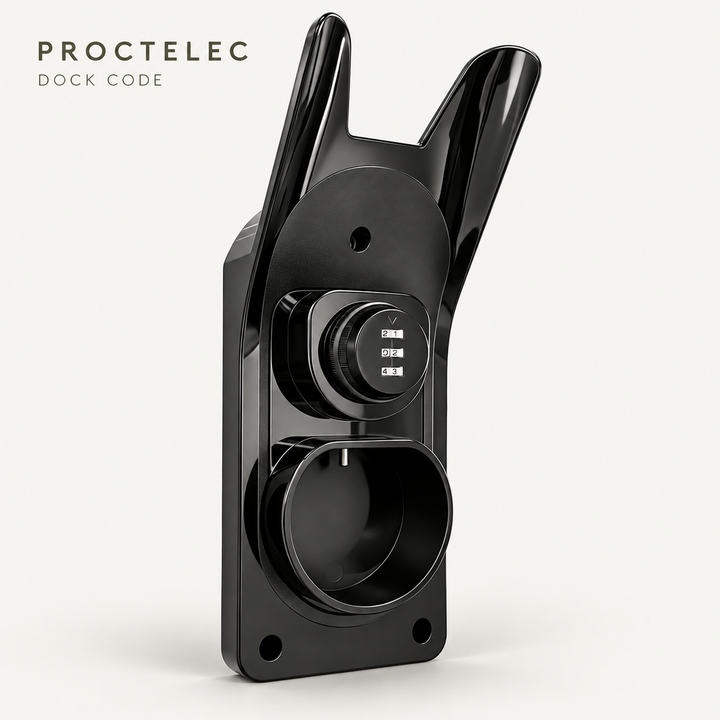
The Dock Code holder combines wall storage with a 3-digit mechanical combination lock that retains the Type 2 connector. It makes opportunistic removal of the plug harder when it is not in use. It does not lock the plug during charging and does not stop anyone cutting the accessible length of cable. Check the shape of your connector handle on the product page before ordering.
3. Socketed charger: keep your cable with you
On a charger with a Type 2 socket, a neighbour has to bring their own cable to charge. If your charger is in open access mode, though, that is all it takes to use your electricity. Enable charging authorisation and keep your cable in the car or in a Carry storage bag rather than on the charger.
Some sockets have a shutter or a locking option. Check with the manufacturer before adding any accessory around the socket: it must not prevent the plug from being fully inserted or charging from stopping normally.
4. EV charger lock box: when a lockable enclosure makes sense
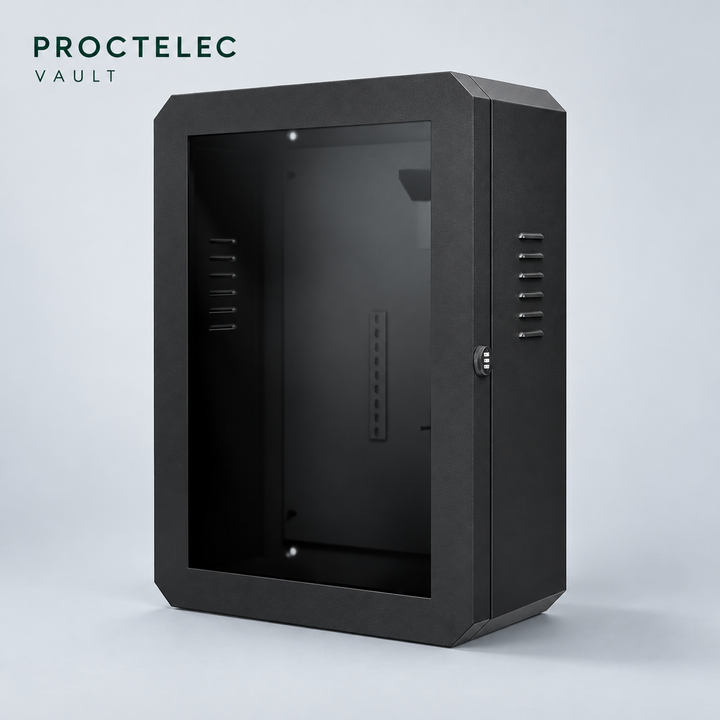
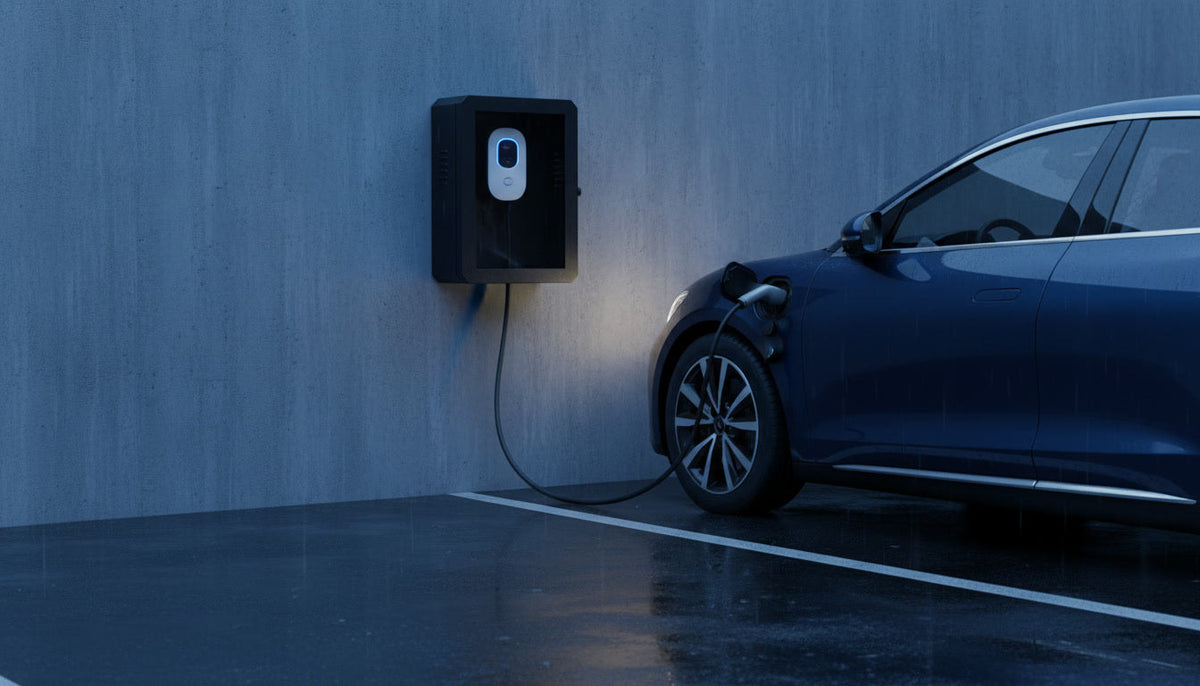
A locked enclosure restricts direct access to the unit and what it contains. It becomes worthwhile when the charger has no access control, when it has already been tampered with, or when it sits on a busy route through the car park. The Vault enclosure comes in 60 × 40 × 20 cm and 70 × 50 × 25 cm, with a transparent door and a code lock.
First compare your charger’s dimensions using our EV charger dimensions chart. Ventilation, access to the controls and cable entries must be approved by your installer. An enclosure is not tamper-proof and does not replace electrical protection or charging authorisation.
5. Keep your parking space free
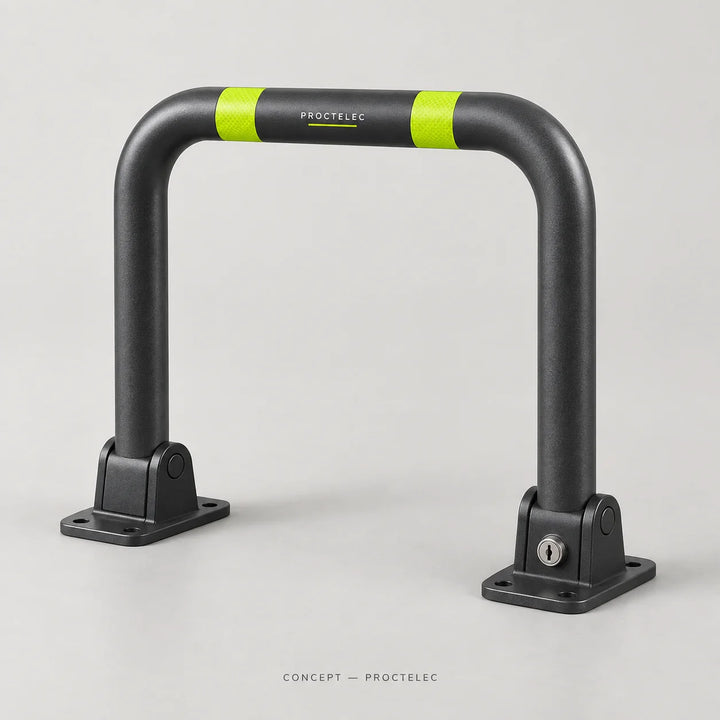
A charger is no use if another vehicle is parked in the space. A key-operated fold-down parking post, such as the Park parking barrier, reserves your private space while you are away. It does not protect against a vehicle impact. The rules for fitting one in a shared car park are explained in our guide to lockable parking posts.
6. What the rules say in a block of flats
In the UK, leaseholders in a block of flats generally need the consent of the freeholder or managing agent before installing a charge point: there is no general statutory right to install one, as law firm B P Collins explains. In Ireland, apartment charging is usually organised through the owners’ management company, and the SEAI Apartment Charging Grant can fund installations.
Adding an enclosure, a wall holder or a parking post on common parts, especially a shared wall or floor, may also need the agreement of the freeholder or management company. Ask in writing before installing anything and keep the replies.
7. Think a neighbour is using your charger?
- Check the session history in the charger’s app, or read the meter at the same time each day for a few days.
- Compare it with your own charging sessions: an unknown session at night or while you were away is a clear sign.
- Enable charging authorisation straight away and change any existing codes.
- Tell the managing agent or management company rather than confronting the person directly.
- Have the charger inspected if there are signs of tampering: do not open the unit yourself.
Frequently asked questions
Can my neighbour use my EV charger?
Technically yes, if the charger is in open access mode and they have a compatible cable. Enabling an RFID card, a code or app locking is usually enough to stop them.
RFID card or lockable enclosure?
They meet different needs. The RFID card controls who can start a charging session. The enclosure restricts physical access to the unit. If your charger supports an RFID card, start there; an enclosure adds protection for an exposed charger.
Do I need the freeholder’s permission?
In the UK, generally yes: leaseholders usually need the consent of the freeholder or managing agent, and there is no general statutory right to install a charge point. In Ireland, apartment charging usually goes through the owners’ management company. Accessories fitted on common parts may also need their agreement, so ask in writing and keep the replies.
How can I prevent cable theft in an underground car park?
Store the connector in a lockable holder or take the removable cable with you. Our guide to preventing EV charging cable theft compares the options for each situation.
Secure your charging space
Code-locked holder, enclosure, parking post: compare the protection options for your charger and your car park.