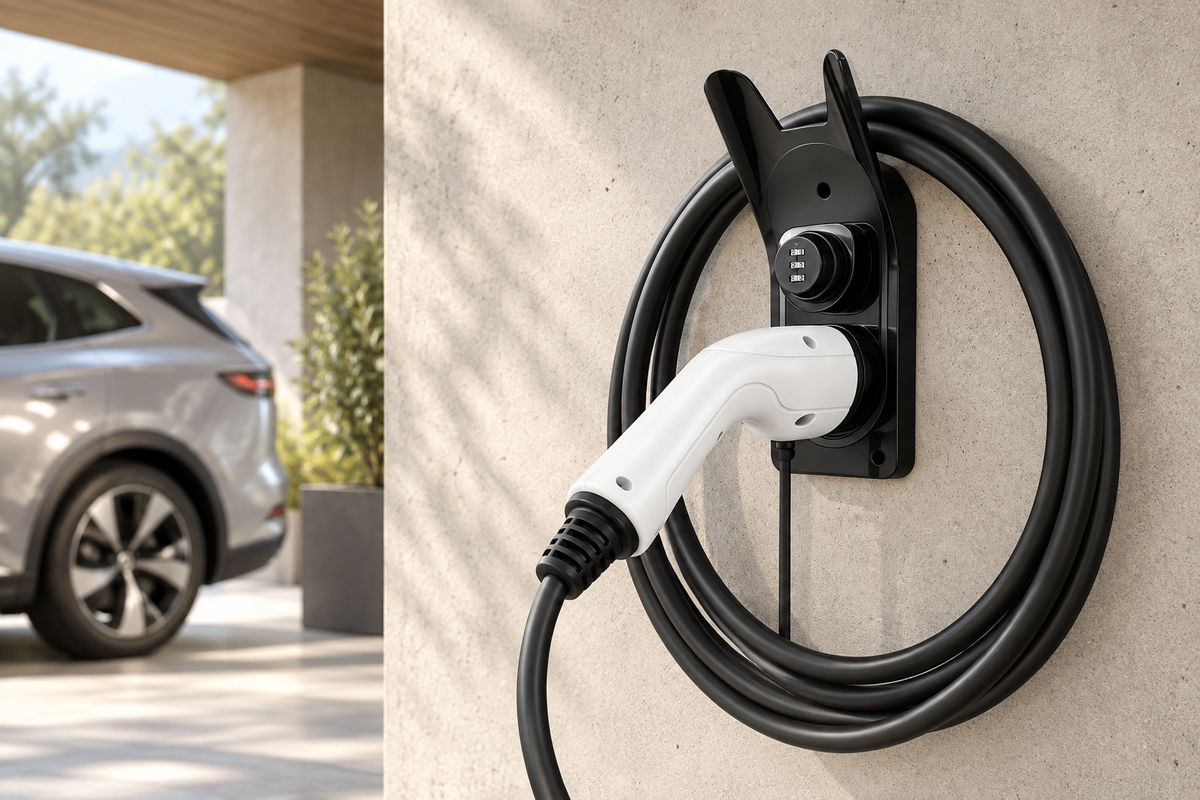
A charging cable needs different protection while it is connected, stored or left on an open parking site. First identify the risk: unplugging, removal of a detachable cable or cutting through its length. A holder that locks a stored connector does not address all three.
- While charging: check the vehicle and charger locking instructions.
- Between sessions: take a detachable cable indoors or use a compatible lockable holder.
- Where cutting is a concern: assess dedicated cable protection and site security together.
Identify your cable and connector
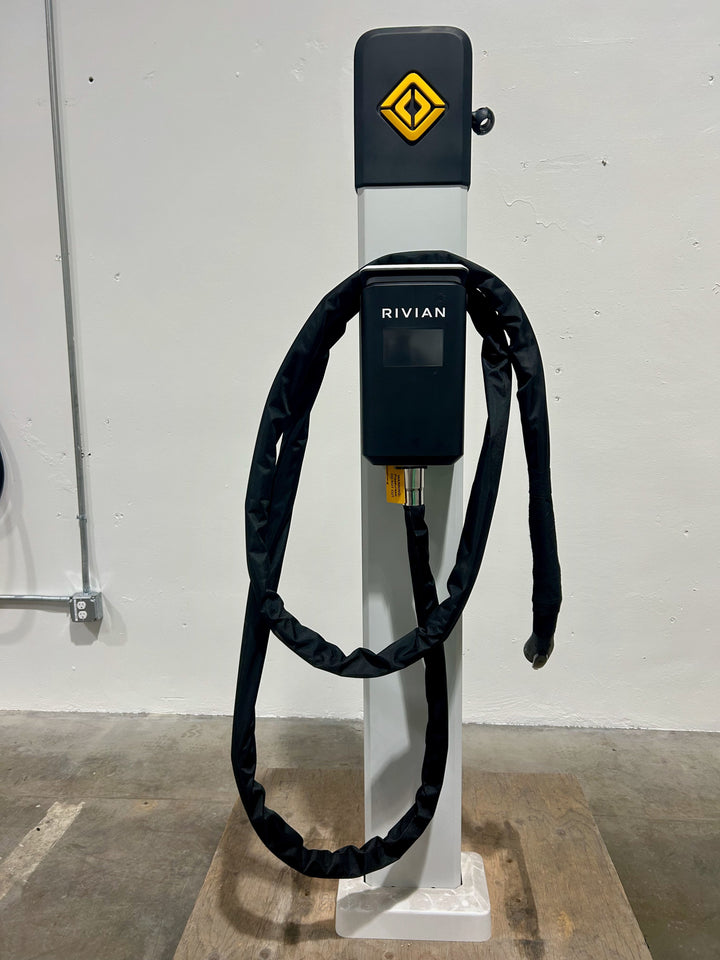
A detachable cable can be stored in a secure place after use. A tethered cable stays with the charger, so its storage position matters every day. Note the charger model, cable diameter and connector standard. Type 2, Type 1/J1772, CCS and NACS are not interchangeable. Even connectors using the same standard can have different outer handles.
Check the lock during charging
Consult your vehicle manual to understand when the connector locks and releases. Behaviour depends on the vehicle, settings and session state. For the vehicles covered in its guide, Volvo describes locking after full insertion; this does not establish how every vehicle works. Check retention at the charger end as well. Never force a connector to test its resistance.
Secure the cable between sessions
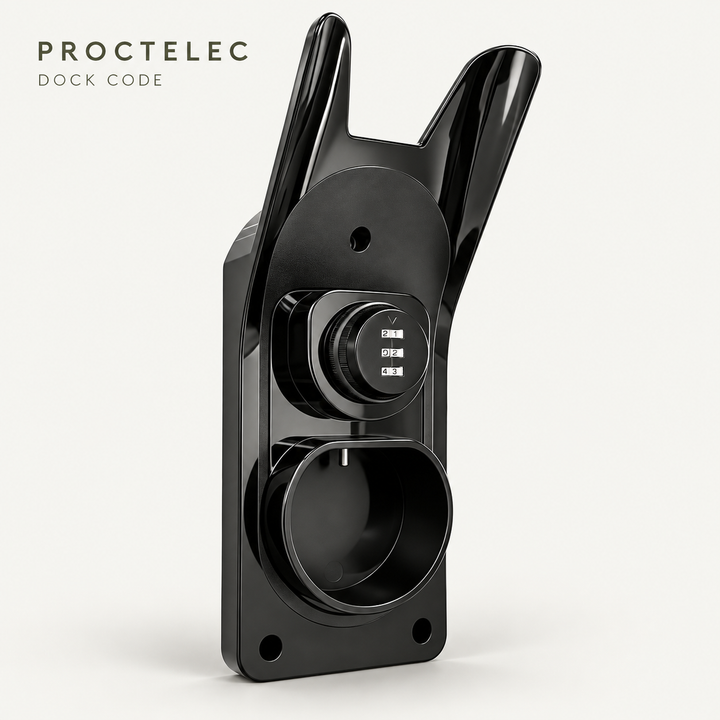
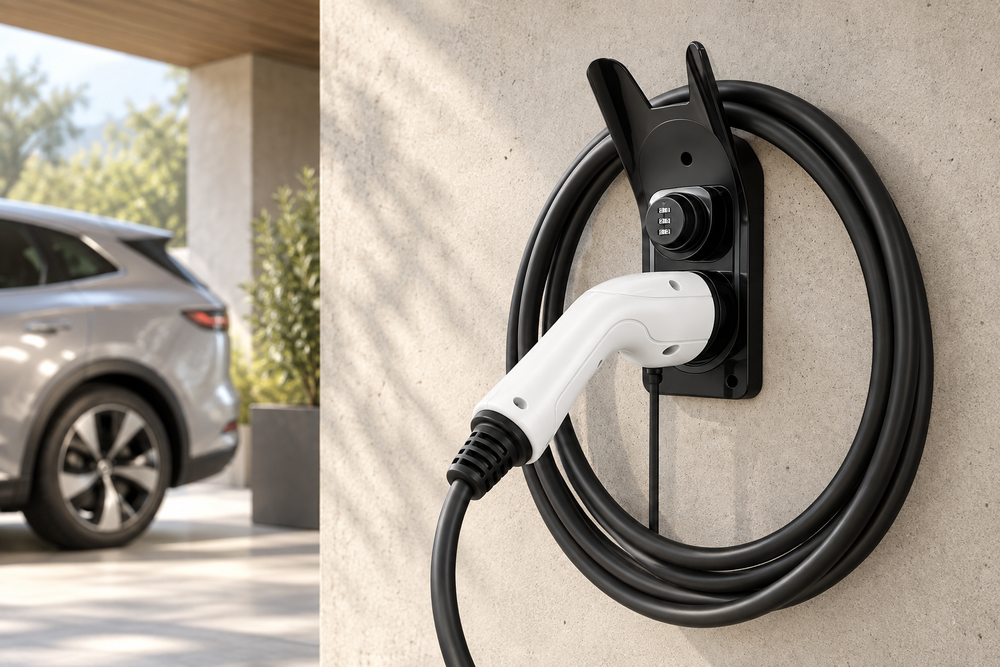
For a compatible, unplugged Type 2 connector, Dock Code combines wall storage and a three-digit combination lock. It retains the connector in the holder; it does not protect the whole cable from cutting. Put the holder on a suitable wall at an accessible height, with generous cable loops and no obstruction to people passing.
A Carry cable bag helps with transport and tidy storage. It is not a theft-resistant container. For a separate mechanical tether or a J1772 adapter lock, check the exact configuration of Tether or Lock J before choosing.
Address cutting as a separate risk
CatStrap EV Cable Shield adds mechanical protection around a compatible cable. The entry configuration offered here is AC, approximately 3 m, without DyeDefender. Check diameter, routing and charger compatibility before ordering. Our cut-resistant cable protection guide explains the measurements to prepare. No accessory makes theft impossible.
Keep the routine simple
Inspect the visible cable before use, stop charging normally before unplugging, then store it without tight bends or pressure. Never trap it under a tyre or door as an improvised lock. If a cable is cut or damaged, do not reconnect it: follow the damaged cable guidance and contact the operator or a qualified professional.