A lockable parking post or fold-down barrier does one job: it keeps your space free while you are away. For a bay with an EV charger, that is often what makes the charger usable when you get home. You still need the right model, solid fixing and, in shared developments, the right consent.
- A manual fold-down barrier with a key lock is the simplest option for a private bay or driveway.
- Check the raised and folded height and the ground type before you order.
- Leaseholders usually need the landlord’s or management company’s written consent.
- You cannot fit a post or barrier on the public highway, including the pavement and verge.
Parking post, barrier or automatic bollard?
| Type | How it works | Worth knowing |
|---|---|---|
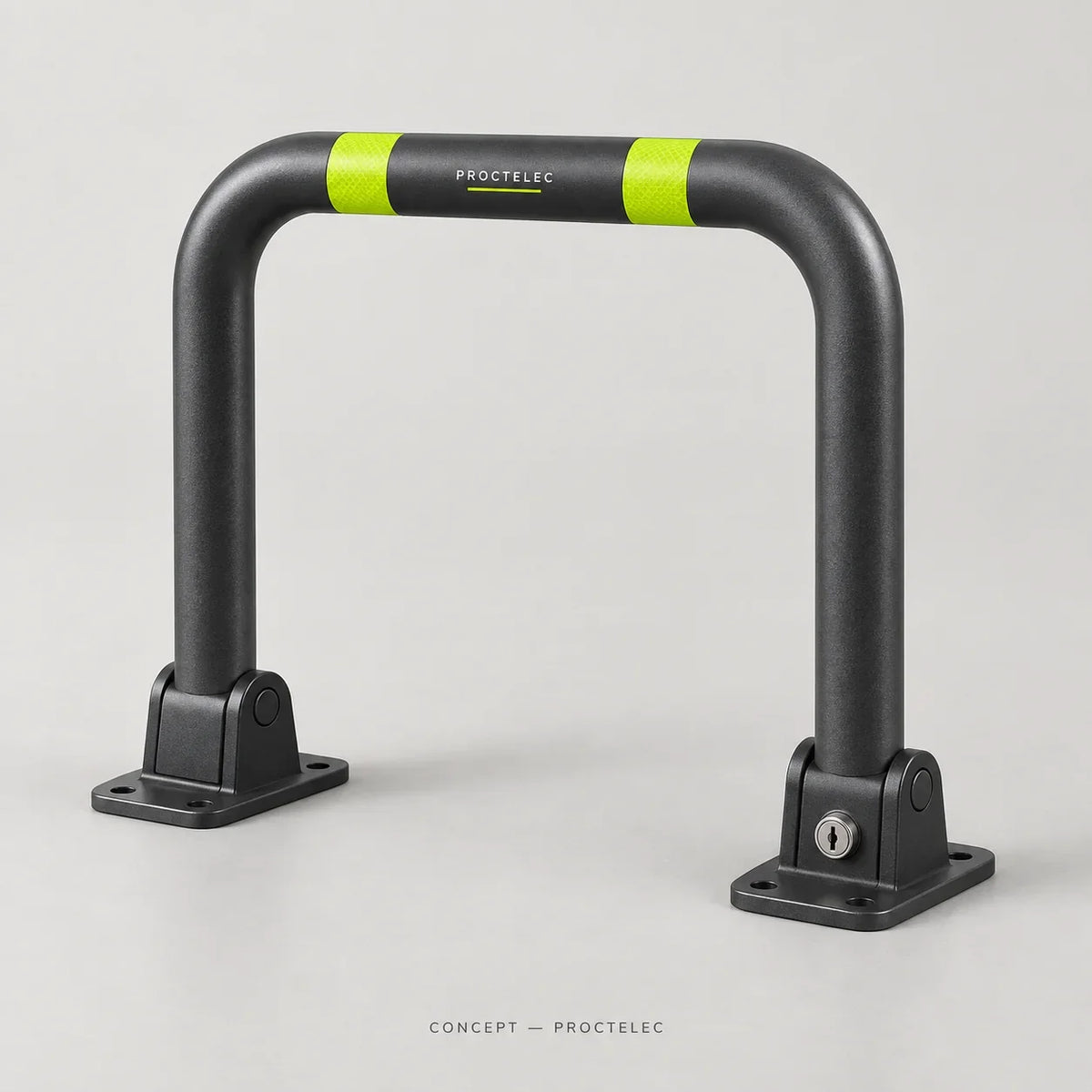
| Fold-down barrier with lock | Raised, it blocks the bay; folded flat, you drive over it. Key lock or padlock. | Simple, no power needed; you step out to operate it. |
| Fold-down or removable parking post | A single post instead of a hoop. | Make sure it is clearly visible to drivers. |
| Automatic barrier | Motorised, remote controlled, often battery or solar powered. | More convenient, but needs charging, set-up and maintenance. |
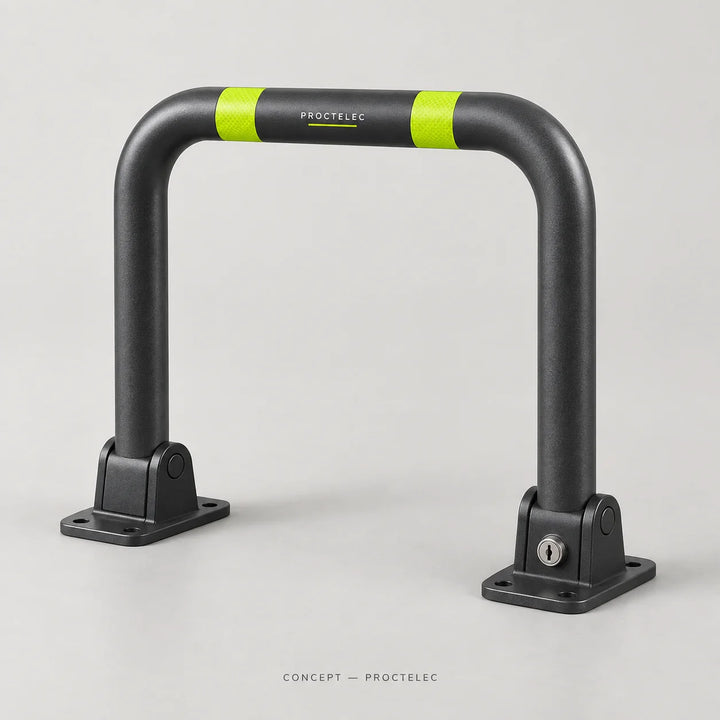
For a private bay used daily by the same driver, a lockable fold-down barrier such as Park does the job with no electronics to maintain.
Six things to check
1. Raised and folded height
Raised, it must be clearly visible. Folded, your car must clear it without touching the underbody or bumper. Compare the stated folded height with your ground clearance.
2. The lock
A built-in key lock is easier than a separate padlock. Keep spare keys if several people use the space.
3. Ground and anchoring
Barriers are usually fixed with anchor bolts into concrete. Tarmac, block paving or thin slabs need more care. “No-drill” models rely on other fixings: compare their stability with how you will use them.
4. Position on the bay
Place it where it blocks entry without getting in the way of your own manoeuvres or door opening. With a charger, make sure the charge port is still within reach once parked.
5. Weather and corrosion
Outdoors, look at the finish, stated corrosion resistance and recommended care, especially near the coast or where roads are gritted.
6. Ease of use
You will operate it every day. A simple mechanism that needs little effort is the one that gets used.
Do you need permission?
- Freehold driveway: fitting a barrier on your own land is usually straightforward. If you live in a conservation area or a listed building, check with your local planning authority first.
- Leasehold flats and shared car parks: the lease decides. Alterations often need the landlord’s written consent, and car parks are frequently retained by the landlord.
- Renting? Ask your landlord in writing.
- Public highway: the public has the right to pass over the full width of the highway, including pavements and verges. Councils can remove posts or barriers placed there and recover the cost.
This guide gives general pointers and is not legal advice. Your managing agent or council can confirm what applies to you.
Installing a parking barrier step by step
- Get any consent you need from your landlord or management company.
- Check for buried services and identify the ground type.
- Park the car and mark the position that blocks entry without hindering your manoeuvres.
- Hold the barrier in place, mark the holes, drill and fix with anchors suited to the surface.
- Test raising, folding and locking several times with the car in the bay.
- Store the spare keys safely.
EV charging bays: what a barrier does and does not do
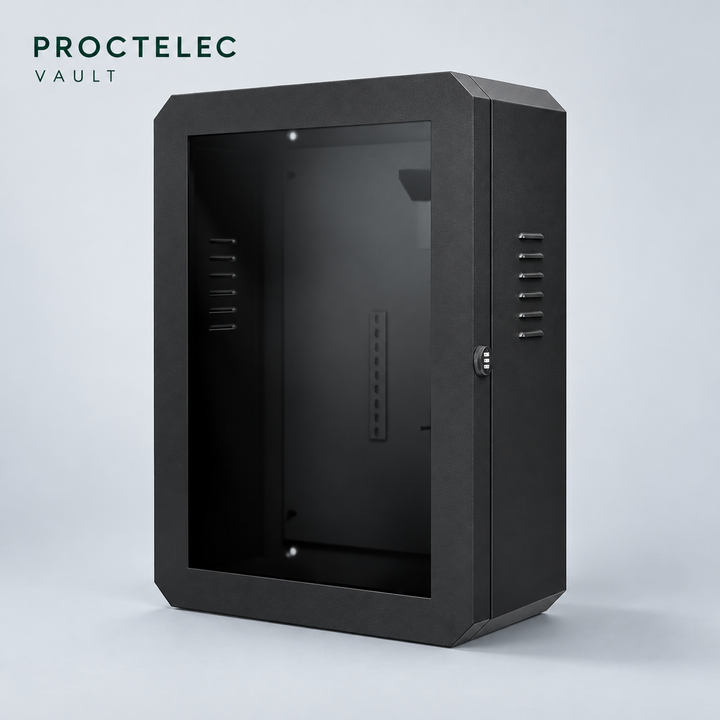
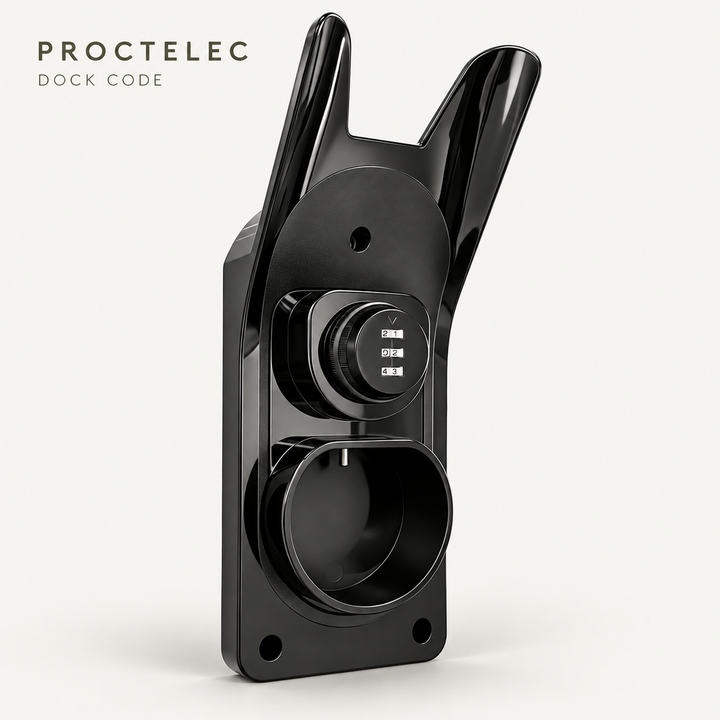
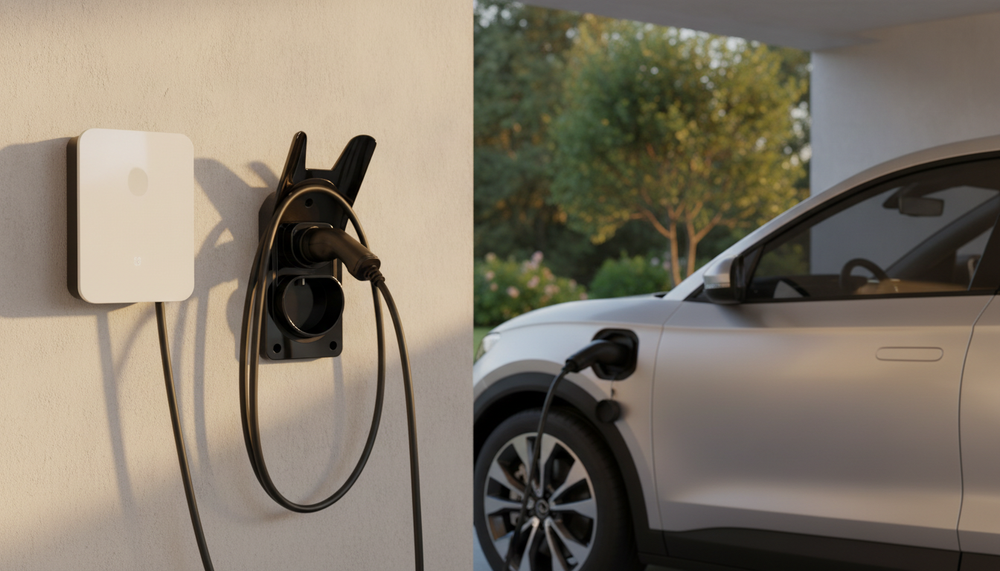
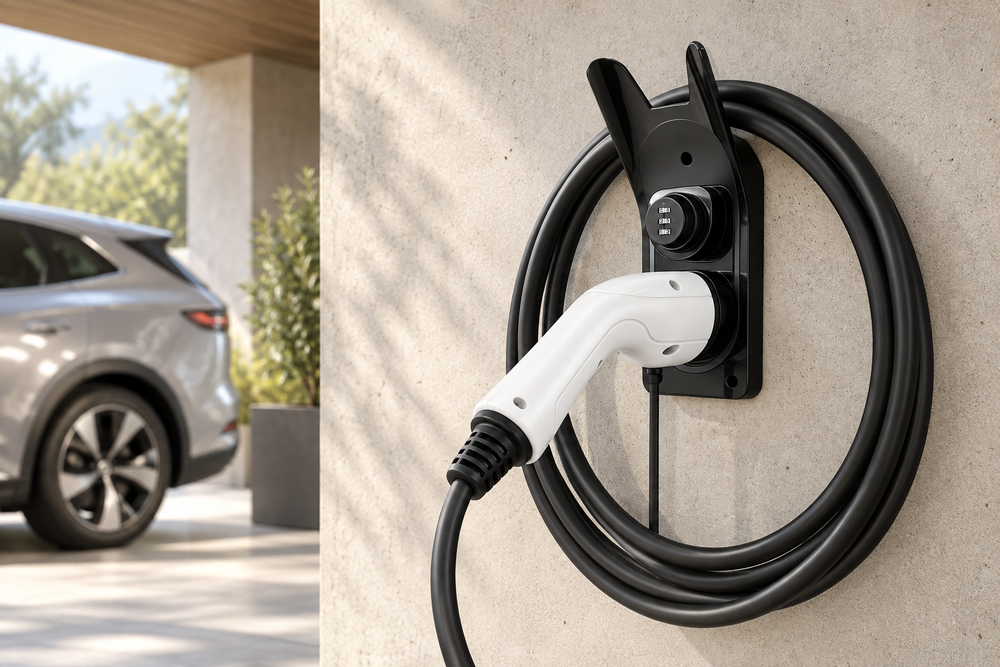
It keeps the space free. It does not protect the charger from impacts or control who can start a charge. If your charger is near a manoeuvring area, read our guide parking barrier for an EV charging spot: reserve or protect?. To limit access to the unit, a lockable EV charger enclosure such as Vault meets a different need, and a Type 2 holder with combination lock keeps the plug secured between sessions.
Frequently asked questions
Is a fold-down barrier enough to deter people?
Raised and locked, it physically stops anyone parking in your bay. It is not a crash barrier and offers no guarantee against deliberate damage.
Do I have to drill the ground?
For most fold-down barriers, yes: anchoring provides the stability. Follow the fitting instructions for your model.
Can I put a parking post on the road outside my house?
No. The highway, including the pavement, cannot be obstructed by private equipment.
Keep your charging bay free
Park is a manual fold-down parking barrier with a key lock, designed for a private bay with an EV charger. Check its footprint and anchoring for your space.
See the Park parking barrier →
Several bays to equip? Tell us about your project.