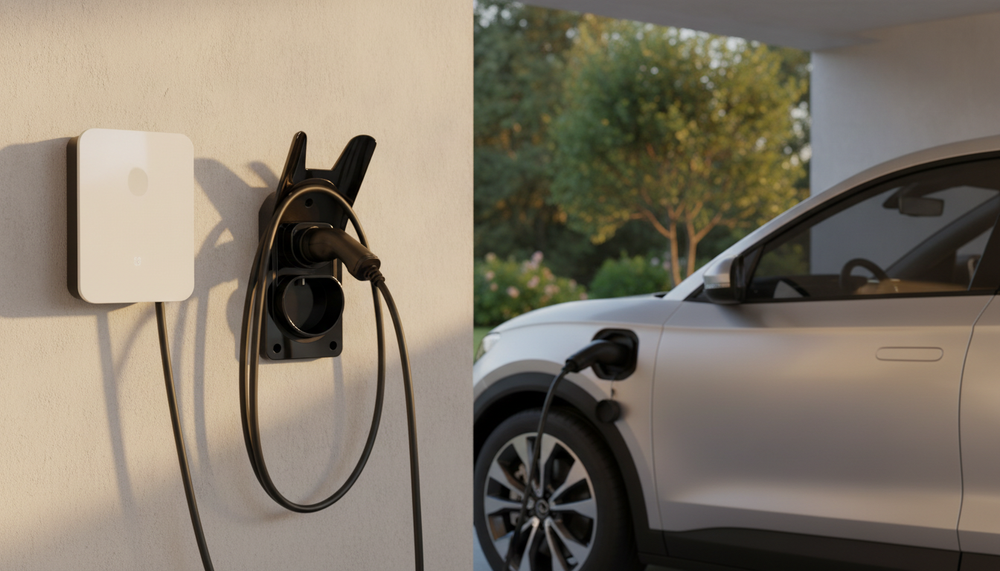
A parking barrier for an EV charging spot can meet two different needs: reserving a parking space or protecting equipment against impacts. A fold-down barrier for reserving a space is not a substitute for mechanical impact protection. Identify your problem before comparing products: a space taken by others, a charger exposed to manoeuvring vehicles or access to the charger housing.
- A private space occupied by other vehicles: look into a reservation device.
- A risk of impact during manoeuvres: install a floor-mounted impact protection barrier such as Guard.
- Unwanted access to the charger housing: consider an enclosure and access management.
- An exposed cable: deal with its storage or protection separately.
Parking barrier vs protective barrier: what is the difference?
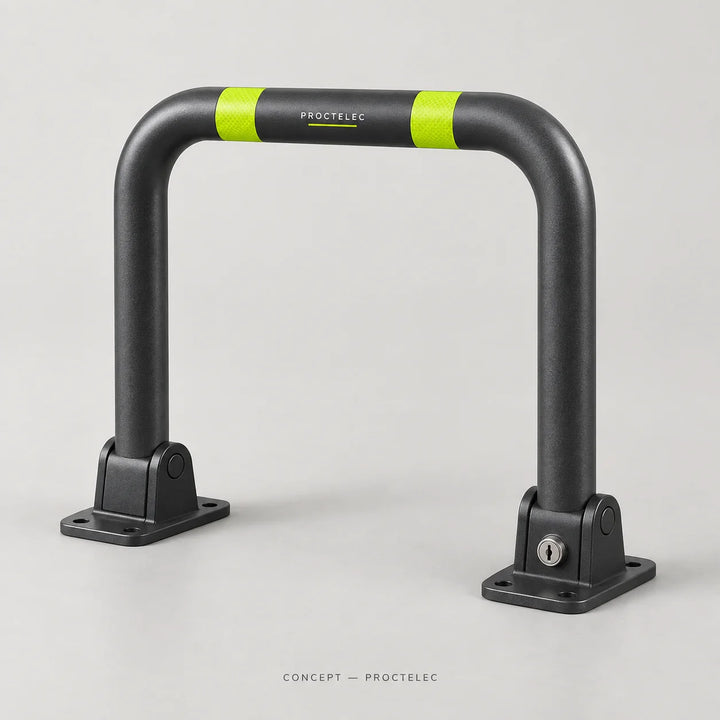
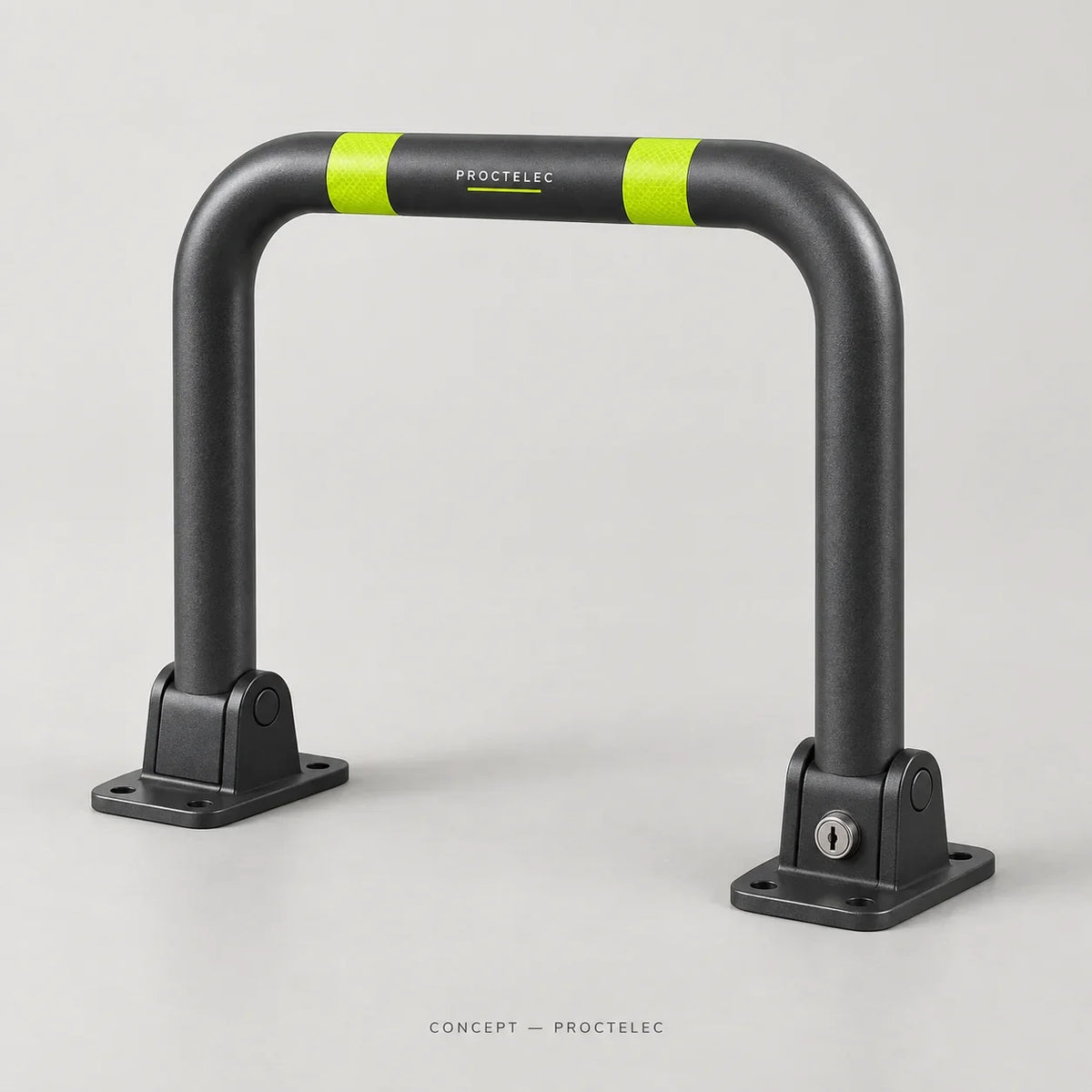
A fold-down parking barrier is used to mark out and control access to a space. It is raised when the space needs to be reserved and folded down to let the authorised user in, as described in its instructions. Its main function is about who occupies the space.
A protective barrier around a charger, on the other hand, is aimed at an area exposed to manoeuvring vehicles. Choosing one must take into account the layout, the vehicles involved, the structure and the anchoring. A metal hoop shape alone does not establish a level of resistance, nor that two products are equivalent.
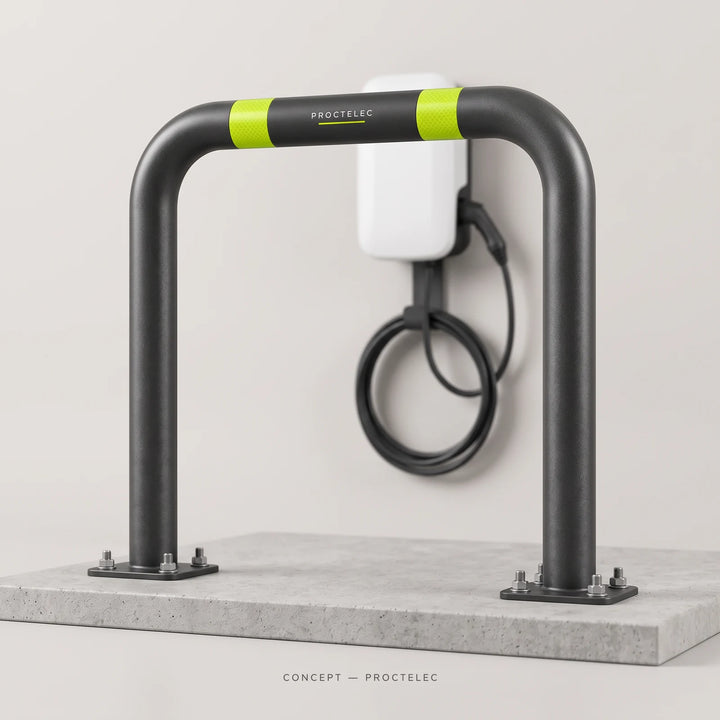
That is the role of the Guard impact protection barrier: a Ø 76 mm galvanised steel tube, fixed to the slab with two base plates and placed between the bay and the charger. It is designed for low-speed manoeuvring knocks (reversing, wheels, bumpers) and is not a certified road safety barrier. A reservation barrier does not provide this function.
Choose according to the problem you face
| Situation | Solution to consider | What it does not replace |
|---|---|---|
| Private space regularly taken by others | Park manual parking barrier for reserving the space. | Protection for the charger against a collision. |
| Charger close to a manoeuvring area | Guard impact protection barrier, anchored to a concrete slab. | Reserving the space and checking the anchoring on your floor. |
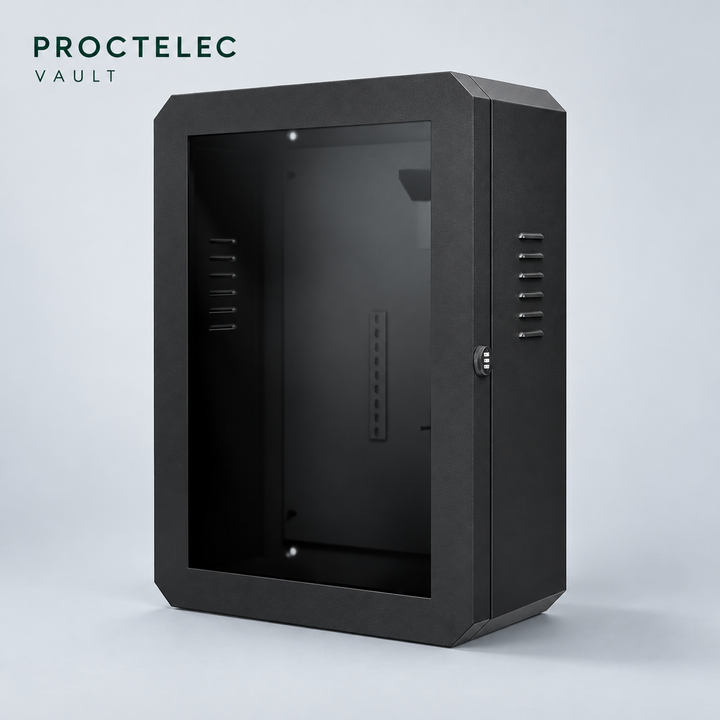
| Direct access to the wallbox housing | Vault lockable enclosure, if it can be fitted around your charger. | Electronic management of charging authorisation. |
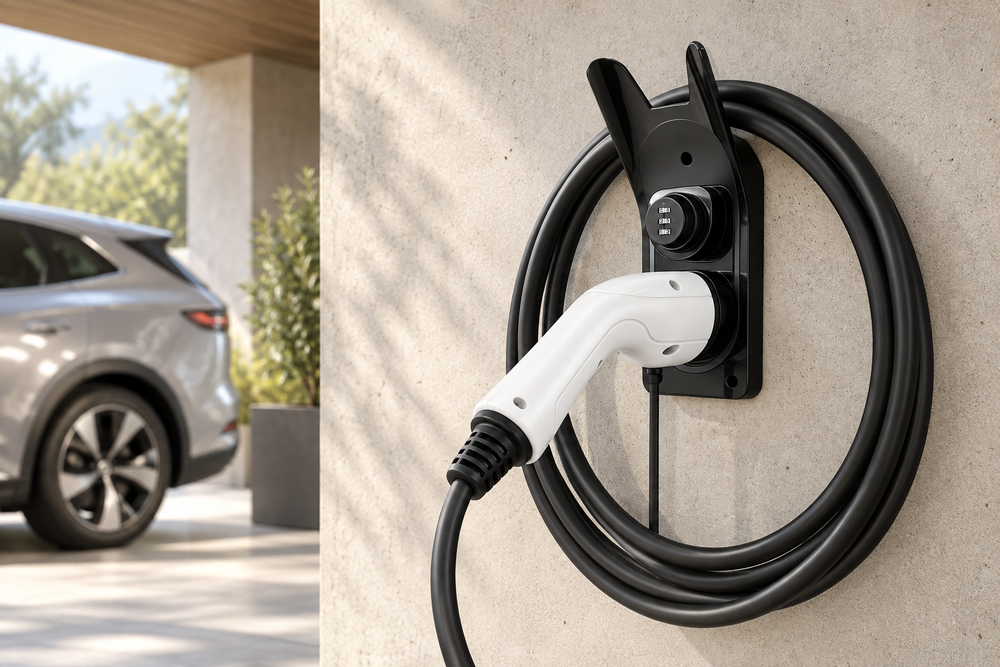
| Type 2 connector left accessible when not in use | Dock Code combination-lock holder. | Protection against the cable being cut. |
The Proctelec range presents Park as a barrier for reserving a private space. It does not present it as an anti-collision barrier. If your priority is to protect a charger from being hit by a manoeuvring vehicle, choose a protective barrier such as Guard. For a site exposed to heavy goods vehicles or higher speeds, have protection sized for that risk assessed.
When is a reservation barrier the right choice?
A private space reserved for charging can become unusable when another vehicle parks there. The charger works, but the driver cannot reach it. In this case, the need is first and foremost about how parking is organised. A reservation device can be considered within the site's usage rights and rules.
For a space used by one person, look at how easy it is to operate every day. For several users, decide how it will be opened and closed, and how the means of access will be managed. A manual solution must suit how often it is used and the abilities of the people involved.
In a company car park, the person in charge must also specify when the space is reserved, who it is for and who steps in if access is blocked. The barrier alone does not organise schedules, sharing between vehicles or authorisation to start a charging session.
For a space in a jointly owned building or a rented space, have the applicable permissions checked before any installation. This guide helps you tell products apart; it does not amount to permission to install an obstacle or alter a parking space.
Checks to make before installation
Dimensions when raised and folded down
Both positions matter. When raised, the barrier must perform the intended reservation function. When folded down, it must leave the necessary clearance for the vehicle and for people. Compare the documented dimensions with your actual space, taking into account the vehicle's ground clearance and how it drives in.
The position of the charging flap
Depending on the vehicle, the charging port is at the front, the rear or on one side. Check that the authorised parking position leaves a suitable route for the cable. A barrier in the wrong place can make it harder to reach the charger or push users to stretch the cable.
The ground and the anchoring
The choice of fixing depends on the ground, the product and the use. Identify buried services and other constraints before drilling. Do not reuse an anchoring plan designed for another product. Installation on an unsuitable surface cannot be put right simply by adding fixings at random.
Movement around the vehicle
Check door opening, the route to the charger and access for maintenance. On a shared site, have accessibility requirements confirmed by the responsible person. Safety at the space includes the users, not just the equipment.
Exposure and maintenance
Check the conditions of use, the locking mechanism and the maintenance instructions of the chosen product. Decide who reports a faulty fixing or difficulty in operating it. Damaged equipment must be assessed before it continues to be used.
Preparing a clear request for a car park with charging points
To avoid quotes for products that cannot be compared, separate the needs in your request. Start by describing what actually happens: a space being occupied, signs of impact, storage difficulties or access to the charger housing. A concrete sentence is more useful than "secure the car park".
- Identify the number of spaces and charging points involved.
- Specify the users: private individual, employees, visitors or fleet.
- Attach a simple plan or photos showing the traffic areas.
- State the charger models and where the cables are.
- Keep reserving spaces separate from protecting against impacts.
- Ask for supply, installation, exclusions and maintenance to be specified in the proposal.
For a collision risk, ask which characteristics and supporting evidence the choice is based on. Do not infer protective capacity from a colour, an apparent diameter or the word "robust". The conditions under which a performance claim is made must be understandable.
For a project that is only about reserving a space, see the Park manual parking barrier product page. Check its installation and operating conditions against your space before ordering.
Two examples of reasoning
A private space in front of a garage: the charger is on a wall, away from the vehicle's usual path, but the space is regularly occupied. The first things to look at are reservation and permission to install. An enclosure around the charger will not free up the space.
Several pedestal chargers next to a manoeuvring lane: the spaces remain accessible, but the layout exposes the equipment to contact with vehicles. A fold-down barrier does not address this risk. A protective barrier fixed in front of each charger, for example Guard in 1000 × 1000 mm, deals with manoeuvring knocks; then check vehicle paths and access to the controls, and deal with parking separately.
These examples describe a method for choosing; they are not installations carried out by Proctelec, nor remote approvals of a particular site.
Adding protection without mixing up functions
Once the space is organised, look at the other areas. The connector stored between sessions may need a holder. Access to the charger housing may justify looking into a compatible enclosure. The length of exposed cable may call for a different approach on a site affected by vandalism.
Our guide to preventing vandalism in a charging car park helps you organise these topics. It complements the choice of a barrier with thinking about use, reporting and equipment checks.
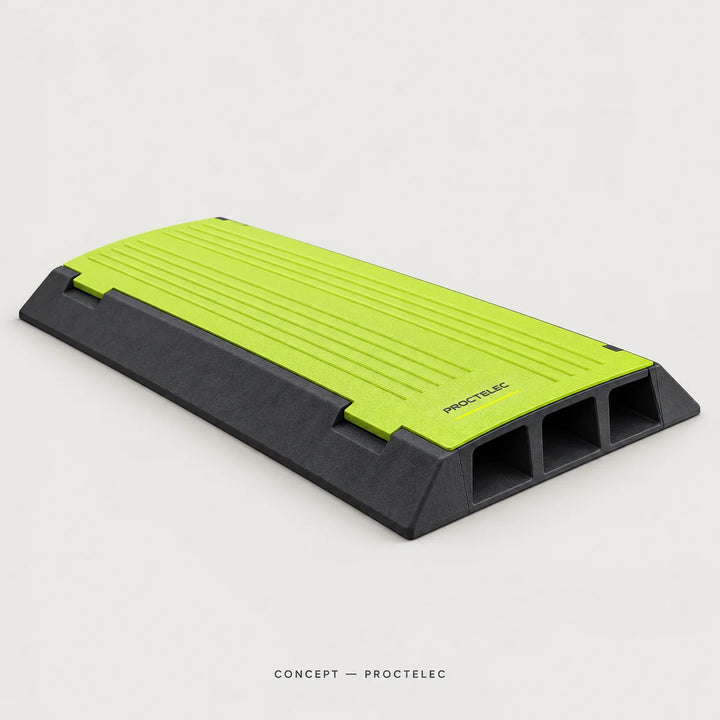
If a cable crosses a walkway, start by reviewing its route. A cable protector such as Pass is chosen according to its channel dimensions and the traffic concerned: it is intended for light vehicles crossing at walking pace, not for heavy goods vehicles, and does not protect against theft.
Frequently asked questions before equipping a charging space
Which barrier protects an EV charger from impacts?
A protective barrier fixed to the floor between the bay and the charger, such as Guard (Ø 76 mm tube, 750 or 1000 mm). It takes low-speed manoeuvring knocks; it is not a certified road safety barrier.
Does Park directly protect my charger from impacts?
No: Park is a reservation barrier. To protect the charger itself, combine it with a protective barrier such as Guard.
Does a barrier stop someone from using my charger?
Reserving the space and authorising charging are two separate functions. Check the access control features your charger offers to control when sessions can start.
Can a barrier be installed on any space?
No. Check usage rights, site permissions, accessibility requirements and fixing conditions. A product page does not give permission to install.
Should I choose a barrier or an enclosure?
A reservation barrier controls access to the space. An enclosure limits direct access to the charger housing, provided it is compatible. Read our guide to charger enclosures if your concern is the equipment itself.
Protect the charger or reserve the space?
Against manoeuvring knocks, the Guard barrier bolts down between the bay and the charger. To keep the space free, the Park fold-down barrier locks with a key.
View the Guard protective barrier →
See the Park reservation barrier · Several points to equip? Submit my car park project.