No driveway and the car parked outside: running the EV charging cable across the pavement looks like the quick fix. It raises two real problems: the pavement is part of the public highway, and a trailing cable can trip a pedestrian. Here is what applies and which options actually work.
- Trailing a cable across the pavement is not permitted; it can breach the Highways Act 1980.
- Permanent cross-pavement channels need the consent of the highway authority, usually your council.
- Cable covers and mats laid on the surface are generally not an approved solution.
- Whoever lays the cable can be liable if someone trips.
What the rules say in the UK
- No trailing cables: government guidance on cross-pavement charging says trailing cables may breach Part IX of the Highways Act 1980.
- Council consent for channels: a permanent channel set into the footway needs the highway authority’s consent, typically under section 178, and possibly a street works licence. Councils such as Haringey license approved channels and ask for public liability insurance.
- Grant support: the chargepoint grant for households with on-street parking can apply when a permanent, approved cross-pavement solution is used. Check the current amount and conditions on GOV.UK.
- Products: the Energy Saving Trust lists dedicated channel systems such as Gul-e and Kerbo Charge. Your council will tell you which ones it accepts.
- Planning: the rules for cross-pavement solutions are being relaxed in England. Check the position with your council before you start.
This guide gives general pointers and is not legal advice. Your council has the final say.
Elsewhere in Europe
- Netherlands: several municipalities install a paid, licensed cable channel in the pavement; loose cables and mats are refused.
- Germany: a cable over the footway needs a special-use permit; a Frankfurt court upheld a refusal in 2022 on pedestrian safety grounds.
Options that work
| Situation | Option | Check |
|---|---|---|
| On-street parking | Council-approved cross-pavement channel, or public and workplace chargers. | Council scheme, costs, insurance. |
| Allocated bay in a shared car park | Chargepoint on your bay with the landlord’s or management company’s consent. | Lease terms and a qualified installer. |
| Private ground: driveway, yard, business site | Charger close to the bay; where the cable crosses a path, a cable protector ramp. | Cable route, diameter, how the area is used. |
Using a cable protector ramp on private ground
On a driveway, yard or business car park, the charging cable sometimes crosses a walkway. A cable protector ramp guides it, makes it visible and stops it being stepped on or pulled. A few rules:
- Shorten the route: the best crossing is the one you avoid by placing the charger closer to the bay.
- Compare the cable diameter with the inner size of each channel, without squeezing the cable.
- Check how the area is used: pedestrians only or vehicles too, and the load documented by the manufacturer.
- No extension leads: most vehicle and cable manufacturers rule them out. Follow your manual.
- Put the cable away after charging and inspect it regularly.
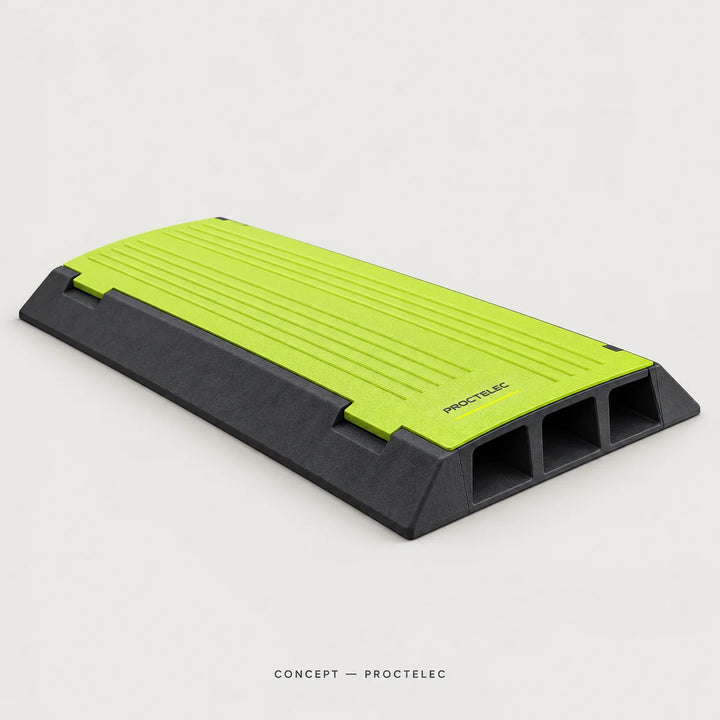
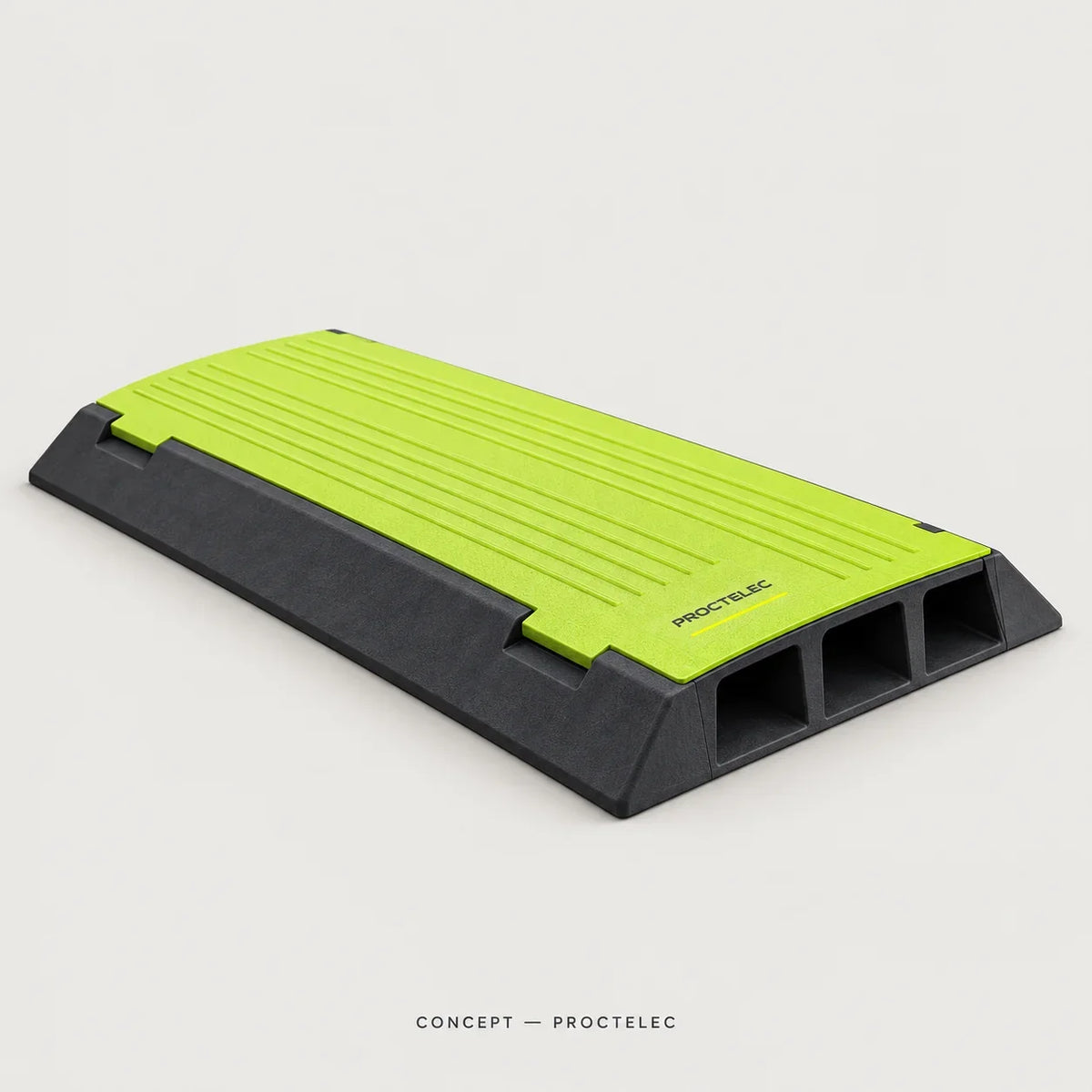
The 3-channel cable protector ramp Pass is designed for private areas like these. It is not a way to use the public pavement and does not protect against cable cutting.
After charging: store the cable
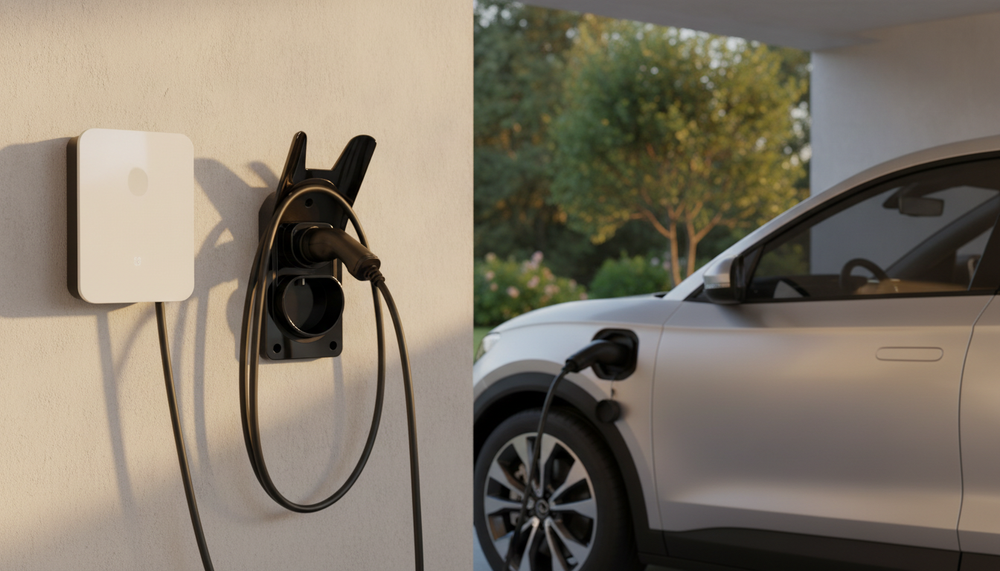
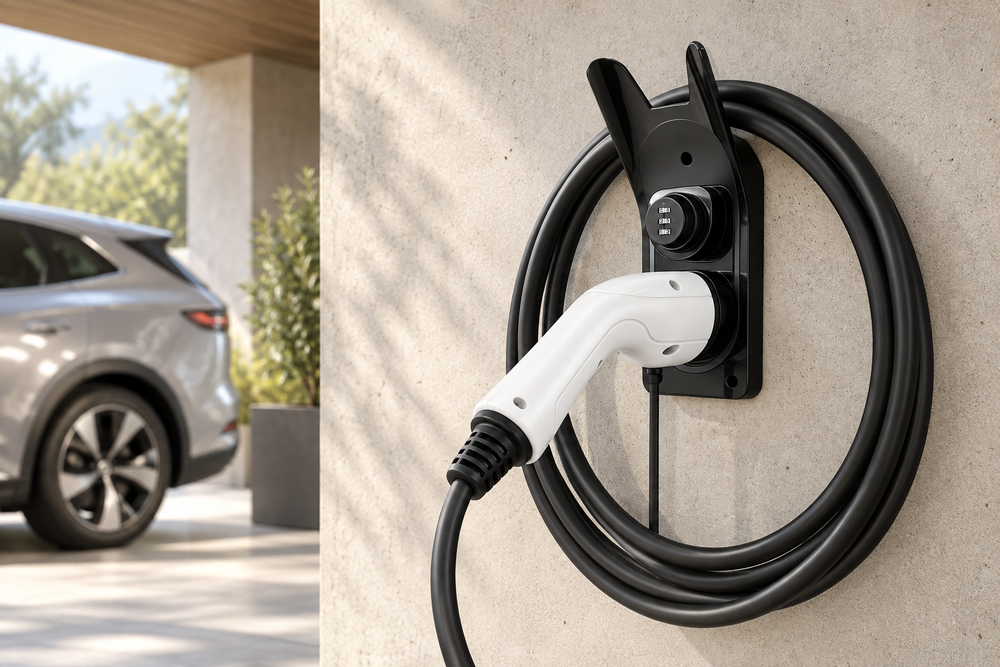
A cable left outside wears and attracts attention. A Type 2 cable holder with combination lock keeps the plug locked to the wall, and an EV charging cable bag keeps the boot tidy. More ideas in our guide EV charging cable storage: 7 solutions.
Frequently asked questions
Is it OK if the cable is only across the pavement overnight?
No. The time of day does not change the rule, and a cable at night is even harder to see.
Does a cable cover make it legal on the pavement?
No. Councils that allow crossings require an approved, flush-fitted channel with their consent, not a surface cover or mat.
Who is liable if someone trips?
In principle, the person who laid the cable. Check your home insurance for public liability cover.
Can I use a domestic extension lead?
Most manufacturers forbid or advise against it. Follow your cable and vehicle instructions.
Running a cable across your own ground?
Pass guides up to three cables across a driveway, yard or private car park. Check the channel sizes and how the area is used before ordering.