An EV charger designed for outdoor use works in winter. The trouble comes from snow building up on the unit, ice on the connector, a cable that turns stiff and slower charging in severe cold. Here is how to prepare your charger before the first frosts, and what to avoid when it snows.
- Check your charger’s temperature range and IP rating in its manual.
- Clear snow with a soft brush, never with a shovel or a metal scraper.
- Frozen connector: no hot water, no tools, no forced pulling.
- Store the plug on a wall holder, not on the ground in the snow.
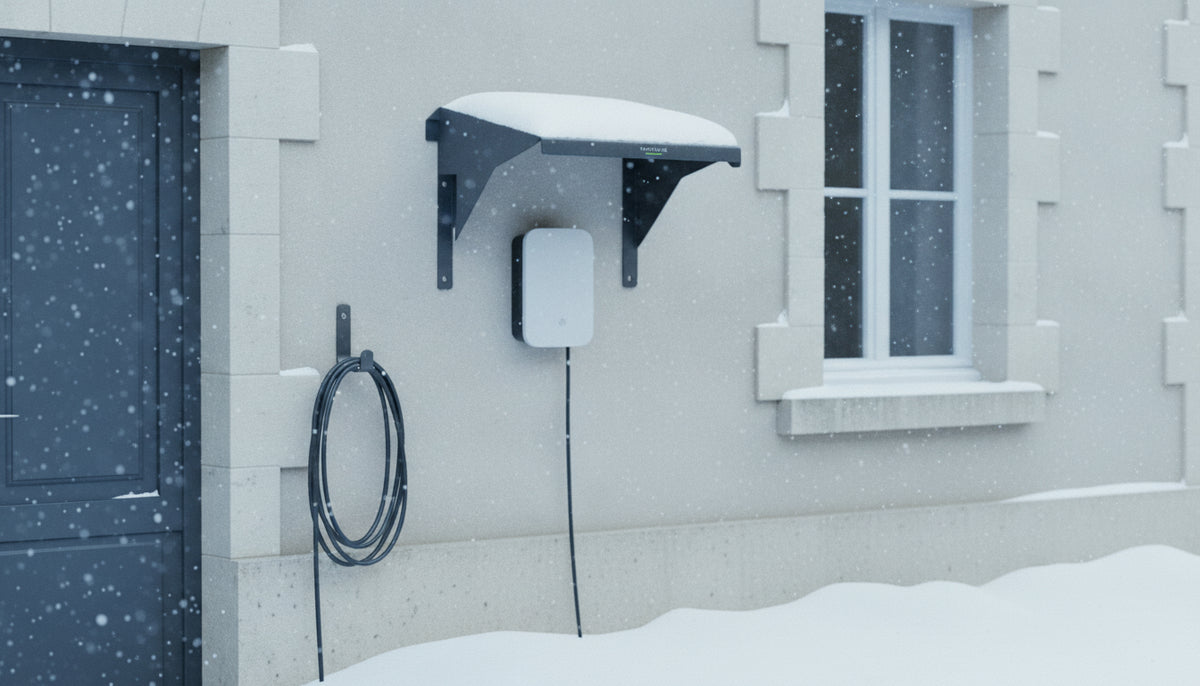
- Exposed wall: a canopy limits snow on the unit, and you can charge with it in place.
Does cold weather damage an EV charger?
No, provided the charger is installed in line with its manual. Wallboxes designed for outdoor use state an operating range, often from −25 °C or −30 °C depending on the model, and an ingress protection rating against water and dust (IP54, IP55 or IP65, for example). Look up these two values on your model’s data sheet: they tell you whether your charger can spend the winter outdoors.
The real winter risks are mechanical and practical: snow packed against the unit, ice jamming the connector, a stiff cable that bends badly, knocks while clearing snow. An accessory does not change a charger’s IP rating: an indoor charger remains an indoor charger, even under a shelter.
Snow on your EV charger: clear it without damaging anything
Remove snow that has built up on top of and in front of the charger with a soft brush or a broom, wearing gloves. Do not use a shovel, scraper or metal tool against the housing, the screen or the socket: a scratched seal or a cracked cover lets moisture in.
- Clear the ventilation openings shown in the manual, without pushing snow into them.
- Do not pile snow against the charger or its post when clearing the driveway: it melts, refreezes and stays in contact with the equipment for days.
- Mark the charger’s position if a snow blower or snow-clearing vehicle works nearby, to avoid an impact.
On a wall with no roof overhang, a canopy reduces the snow falling directly onto the unit and the socket. It fits above the wallbox and leaves the front clear: you can charge without removing anything.
Does your EV charger need a shelter in winter?
It is not a requirement. A charger designed for outdoor use can stay outside all winter. A shelter becomes useful in three situations:
- A wall exposed to the weather, with no roof overhang: the Shelter canopy covers the top while the charger is in use.
- A charger left unused for several weeks, for example at a holiday home: a cover protects it while idle. It must be removed before every charging session, unless the charger manufacturer has given written approval.
- A charger accessible to other people in a shared car park: the main issue is access to the unit. A code-locked enclosure such as Vault is a better answer than a roof, with ventilation to be approved by your installer.
To compare models, browse our range of EV charger shelters and our article canopy, cover or enclosure: which one to choose.
Frozen socket or connector: what to do
After freezing rain or a very cold night, the connector can stay stuck in the vehicle’s charging inlet, or ice can stop you plugging it in. In both cases, do not force it.
- Check the vehicle’s manual: many models offer an inlet unlock or de-icing function, as well as an emergency manual release.
- Unlock the vehicle with the key or the app, then try removing the connector again without pulling on the cable.
- Warm up the vehicle if the function exists (preconditioning): the area around the charging flap thaws gradually.
- Never use hot water, liquid de-icer on the contacts, or a tool to lever it out: the water refreezes, and a damaged contact heats up during the next charge.
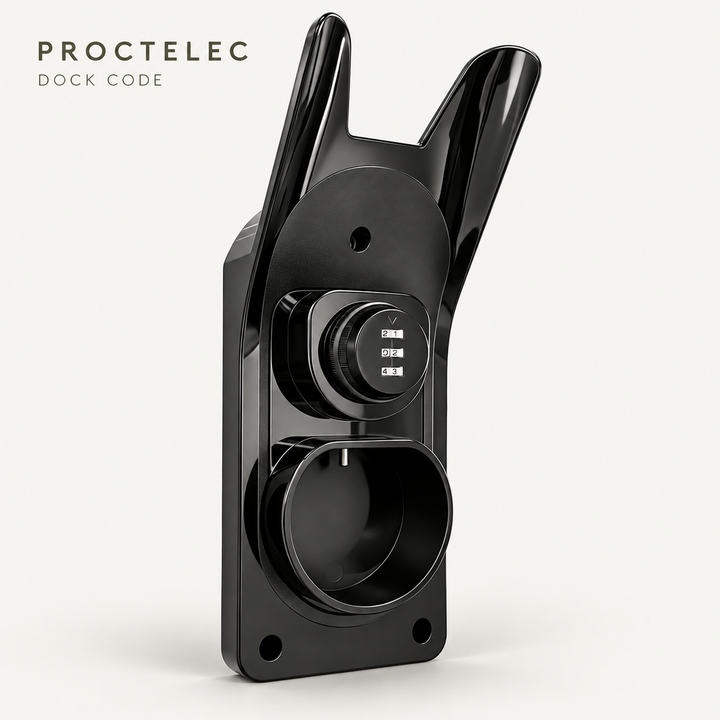
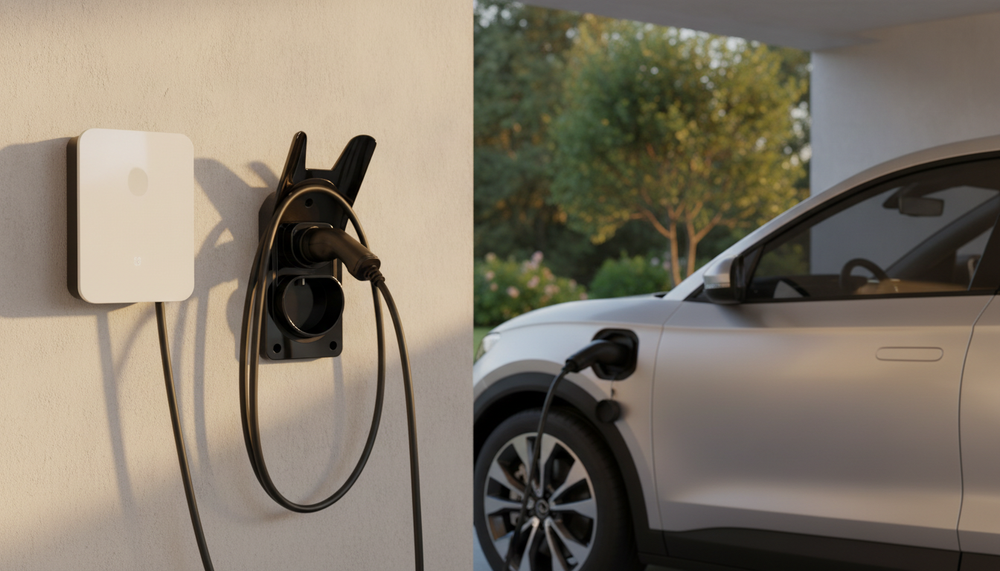
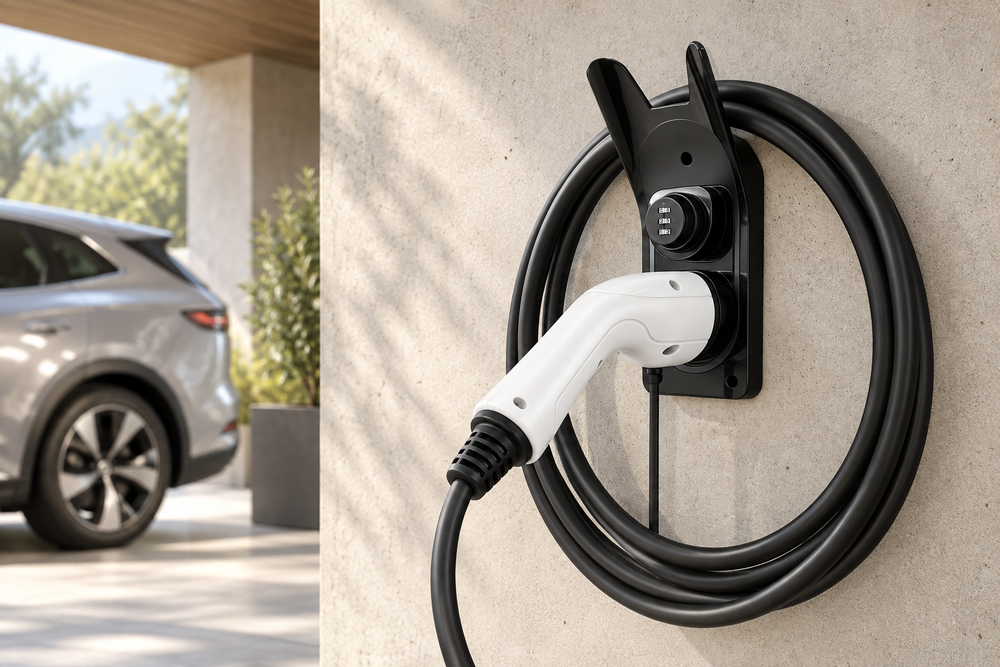
Prevention is still the best remedy: a connector stored out of the spray, on a wall holder, freezes far less than a plug left on the ground or hanging in the snow.
Stiff charging cable in cold weather
Cold makes the cable sheath stiffer. Forcing tight loops or bending it over a sharp edge weakens it, especially near the handle. A few simple habits are enough:
- Coil it in wide loops, respecting the bending radius given by the cable manufacturer.
- Do not leave the cable in the snow or across a driveway: wheels, shovels and snow blowers crush it without anyone noticing.
- Inspect the sheath at the start and end of winter: cracks, crushing or exposed sections mean you must stop using it. Our guide to a damaged charging cable explains what to do.
In a garage or under a carport, a wall holder keeps the cable and plug dry and within easy reach. Other options are compared in our article on EV charging cable storage.
Your car’s charging flap and inlet under snow
Snow and frost also build up around the car’s charging flap. Brush it gently before opening it, without scraping the bodywork, and close it as soon as you unplug. If you often charge outdoors, an external charging port cover limits the inlet’s exposure to the weather; choose one to suit your bodywork. Our guide to charging port protection in rain and snow covers compatibility in detail.
Slower charging in winter: is it normal?
Yes. A cold battery accepts less power: the battery management system limits charging until the battery reaches a sufficient temperature, to protect it. The effect is most noticeable when rapid charging at a public charger; at home, some of the energy may also go into warming the battery, which makes the session longer.
- Schedule charging to finish just before you leave: the battery is still warm when you set off.
- Precondition while plugged in: the cabin and battery warm up using grid power rather than your range.
- Leave the vehicle plugged in in severe cold if your manufacturer recommends it: some models use this to keep the battery at temperature.
Electrical safety: moisture, condensation and the RCD
Temperature swings encourage condensation. If the charger’s RCD trips repeatedly in damp weather or during a thaw, do not keep resetting it and do not open the unit: call in a qualified EV-charging electrician (IRVE-certified in France). They will check the sealing of the cable glands and gaskets, as well as the type of residual current protection. To understand these protective devices, read our article on electrical protection for an EV charger.
Checklist: get your EV charger ready for winter
| What to check | Why | Solution |
|---|---|---|
| Temperature range and IP rating | Know whether the charger is built to spend winter outdoors | Manufacturer’s manual and data sheet |
| Seals, cover, cable glands | Prevent water ingress during the thaw | Visual check; a qualified EV-charging electrician if in any doubt |
| Snow on the unit | Limit build-up on an exposed wall | Shelter canopy |
| Charger unused all winter | Dust, dirt and weather while idle | Cover or Cover Post storage cover, removed before charging |
| Plug and cable | Connector on the ground = frozen or crushed connector | Wall holder near the charger |
| Cable sheath | Cold reveals cracks | Inspection; stop using it if damaged |
| Snow clearing | Knocks from shovels or snow blowers | Soft brush, snow piled well away |
For the other seasons (rain, heat, wind, theft), our guide to protecting an outdoor EV charger all year round completes this checklist, and the complete EV charger protection guide covers every risk.
EV charger in winter: frequently asked questions
Can you charge an electric car in the snow?
Yes, with a charger and cable designed for outdoor use and in good condition. Clear snow from the inlet and connector before plugging in, and do not use damaged equipment.
Can you leave a cover on the charger while charging?
No, unless the charger manufacturer has given written approval. A cover is for idle periods and must be removed before every charge. For protection during use, choose a canopy that leaves the socket accessible.
Should you switch off or disconnect your charger in winter?
It is not necessary for a charger designed for outdoor use. If you are away for a long period, follow the manufacturer’s manual; a cover can then protect the charger while idle.
Why does my charger’s RCD trip when it freezes?
Moisture or water ingress during a thaw can cause tripping. Do not keep resetting it: have the installation checked by a qualified EV-charging electrician (IRVE-certified in France).
Does a shelter stop the socket from freezing?
It limits the snow and rain falling directly on the charger, which reduces the risk without eliminating it in severe cold. Storing the connector on a wall holder, out of the spray, remains the most effective step.
Get your EV charger ready for winter
Not sure about the dimensions? Send us a photo of your charger and we will check compatibility with you.